How Long Does a Dental Implant Take to Heal?
Dental implants are designed to replace missing teeth by providing a stable foundation for a crown, bridge or denture. Although implant placement may be completed in a single appointment, healing takes longer because the implant needs to integrate with the surrounding jawbone before the final restoration can be fitted.
The dental implant healing time varies from person to person. It depends on factors such as bone quality, the location of the implant, overall health and whether additional procedures—such as bone grafting—are required.
Understanding the dental implant healing stages can help you prepare for recovery, follow your dentist’s instructions and recognise when you may need professional advice.
How Long Is the Dental Implant Healing Time?
In many cases, the implant needs several months to integrate with the jawbone. The exact timeline depends on your clinical situation, and your dentist will assess healing before proceeding with the final restoration.
It is useful to distinguish between two stages:
- Initial recovery: The gum tissue begins to heal, and post-operative tenderness or swelling usually improves over the first several days.
- Bone integration: The implant gradually bonds with the surrounding bone. This process can take several months before the implant is ready to support the final restoration.
A straightforward case may progress more quickly than treatment involving bone grafting, extraction or other preparatory procedures. Your dentist will explain the expected timeline for your treatment.
Dental Implant Healing Stages
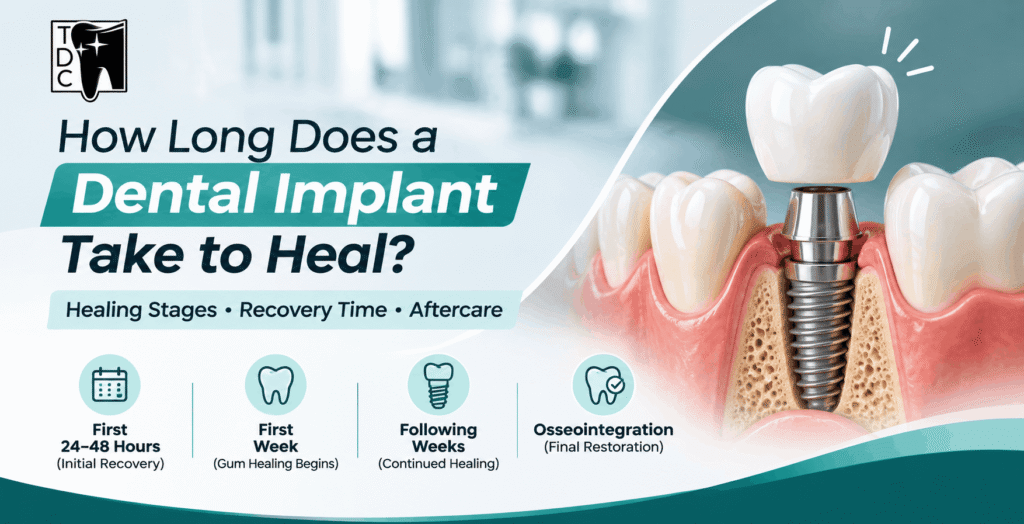
Stage 1: The First 24–48 Hours
The first couple of days are focused on protecting the surgical site and managing normal post-operative symptoms. Some swelling, bruising, tenderness or minor bleeding may occur.
Follow the instructions provided by your dental team. These may include resting, using a cold compress as directed, eating soft foods and avoiding activities that could disturb the surgical area.
Avoid touching the implant site with your fingers or tongue, and do not rinse vigorously unless your dentist has instructed you to do so.
Stage 2: The First Week
During the first week, discomfort and swelling should generally begin to settle. The gum tissue starts healing around the surgical site, although the implant is still integrating with the bone.
Continue gentle oral hygiene and follow any instructions about rinsing, brushing and prescribed medication. Attend your scheduled review if one has been arranged.
If symptoms become more severe rather than gradually improving, contact your dental team for advice.
Stage 3: The Following Weeks
Over the next several weeks, the gum tissue continues to heal while the bone integration process progresses. You may feel increasingly comfortable, but this does not necessarily mean the implant is ready for normal loading.
Your dentist may recommend avoiding hard or crunchy foods near the implant or limiting pressure on a temporary restoration. Follow the advice specific to your implant and bite.
Stage 4: Osseointegration and Final Restoration
Osseointegration is the process by which bone grows around and bonds with the implant surface. This provides the support needed for the final crown, bridge or denture.
The timing varies depending on bone quality, implant location and whether grafting was performed. Once your dentist confirms that the implant has healed sufficiently, the restorative stage can proceed. This may involve taking impressions or digital scans, fitting an abutment and attaching the final restoration.
How Long After a Dental Implant Can I Eat?
You can usually begin with soft, cool or lukewarm foods once you are comfortable and the numbness from anaesthesia has worn off. The exact instructions depend on the procedure and your dentist’s recommendations.
Foods to Choose During Early Recovery
During the initial recovery period, softer foods may be easier to eat and less likely to disturb the surgical area. Examples include:
- Yoghurt and soft dairy foods.
- Mashed potatoes or soft vegetables.
- Scrambled eggs.
- Smooth soups that are not too hot.
- Soft pasta or well-cooked grains.
Avoid chewing directly over the implant site until your dentist says it is safe. Hard, crunchy, sticky or very hot foods may irritate the area or place unwanted pressure on the healing tissues.
When Can You Return to Your Normal Diet?
Many patients gradually return to a more varied diet as tenderness improves. However, the implant may still be integrating with the bone even after the gum feels comfortable.
Your dentist will advise when to resume harder foods based on the implant’s stability, the type of restoration and your healing progress. Do not use the absence of pain as the only indication that the implant is ready for full chewing pressure.
Dental Implant Recovery Time: What Can Affect It?
Several factors can influence dental implant recovery time:
Bone Quality and Implant Location
The amount and quality of available bone can affect how the implant integrates. Implants in different areas of the mouth may also experience different chewing forces.
Bone Grafting or Additional Procedures
If bone grafting is required, healing may take longer because the grafted area needs time to mature before or alongside implant treatment. The timing depends on the type and extent of grafting and the individual’s healing response.
Oral Hygiene and Gum Health
Keeping the mouth clean helps support healthy healing. Existing gum disease should be assessed and managed, and patients should follow the recommended cleaning routine around the implant.
General Health and Lifestyle
Certain medical conditions, medications and lifestyle factors—including smoking—may affect healing. Tell your dentist about your medical history and all medications you take so your treatment plan can account for relevant risks.
Bone Graft Healing Before Dental Implants
Some patients do not have enough jawbone to support an implant in the planned position. In these cases, a dentist may recommend bone grafting to rebuild or augment the area.
Depending on the clinical situation, the graft may be placed before implant surgery or at the same time as implant placement. If grafting is performed first, the area may need several months to heal before the implant can be placed.
The required healing period depends on the size and location of the graft, the material used and the patient’s response. Your dentist will assess the site and determine when it is ready for the next stage.
Dental Implant Aftercare in Dubai: How to Support Healing
Following appropriate dental implant aftercare can help protect the surgical site and support recovery. Your dentist will provide instructions tailored to your procedure.
Keep the Area Clean
Brush your teeth carefully and follow your dentist’s guidance on cleaning around the implant. Avoid vigorous brushing directly over a fresh surgical site until you have been advised that it is safe.
Follow Medication Instructions
Use prescribed medication exactly as directed. Do not start, stop or change medication without consulting your dentist or prescribing clinician.
Avoid Smoking
Smoking can impair oral healing and may increase the risk of implant complications. If you smoke, ask your dental team for advice about avoiding tobacco during recovery and beyond.
Attend Follow-Up Appointments
Follow-up visits allow your dentist to monitor the surgical site and assess whether healing is progressing as expected. Keep these appointments even if you feel well.
Dental Implant Healing Complications: When to Contact Your Dentist
Some discomfort and swelling can be expected after surgery, but certain symptoms require professional assessment.
Contact your dental team if you experience:
- Pain or swelling that becomes worse instead of improving.
- Persistent or heavy bleeding.
- Fever or feeling generally unwell.
- Pus, an unpleasant taste or other signs of possible infection.
- Movement of the implant or temporary restoration.
- Difficulty swallowing or breathing.
Difficulty breathing or swallowing, or rapidly increasing swelling, requires urgent medical attention.
Get Personalised Dental Implant Guidance at TDC Dental
Dental implant healing time depends on your oral health, the procedure and how your body responds. Understanding the recovery stages and following your aftercare instructions can help you prepare for treatment and support healing.
If you are considering dental implants in Dubai, contact TDC Dental to arrange a consultation and discuss your treatment timeline, recovery expectations and aftercare plan.
Frequently Asked Questions
How long does a dental implant take to heal completely?
Healing varies, but bone integration often takes several months. The total treatment time may be longer if you need an extraction, bone graft or other preparatory procedure. Your dentist will confirm when the implant is ready for the final restoration.
Is dental implant recovery time the same for everyone?
No. Recovery depends on the complexity of surgery, bone quality, oral health, general health and whether additional procedures were performed.
How long after a dental implant can I eat normally?
You can usually begin with soft foods after the anaesthetic wears off, then gradually broaden your diet as comfort improves. Your dentist will tell you when it is safe to chew normally around the implant.
Does bone grafting increase dental implant healing time?
It can. A graft may need time to heal and mature before implant placement or before the implant can support the final restoration. The timeline depends on the graft and your clinical needs.
What are common dental implant healing complications?
Potential complications include infection, persistent inflammation, delayed healing or problems with implant integration. Seek advice if symptoms worsen, persist or include fever, pus, heavy bleeding or implant movement.
What should I avoid during dental implant recovery?
Avoid disturbing the surgical site, smoking, vigorous rinsing immediately after surgery and chewing hard foods directly over the implant until your dentist advises that it is safe. Follow your personalised aftercare instructions.