Who Is a Good Candidate for Dental Implants?
Dental implants are a widely used option for replacing missing teeth. They provide a foundation for a replacement crown, bridge or denture and are designed to function as part of your bite. However, dental implants are not automatically suitable for everyone. Your oral health, jawbone condition, medical history and ability to maintain good hygiene all influence whether treatment is appropriate.
So, who is a good dental implant candidate?
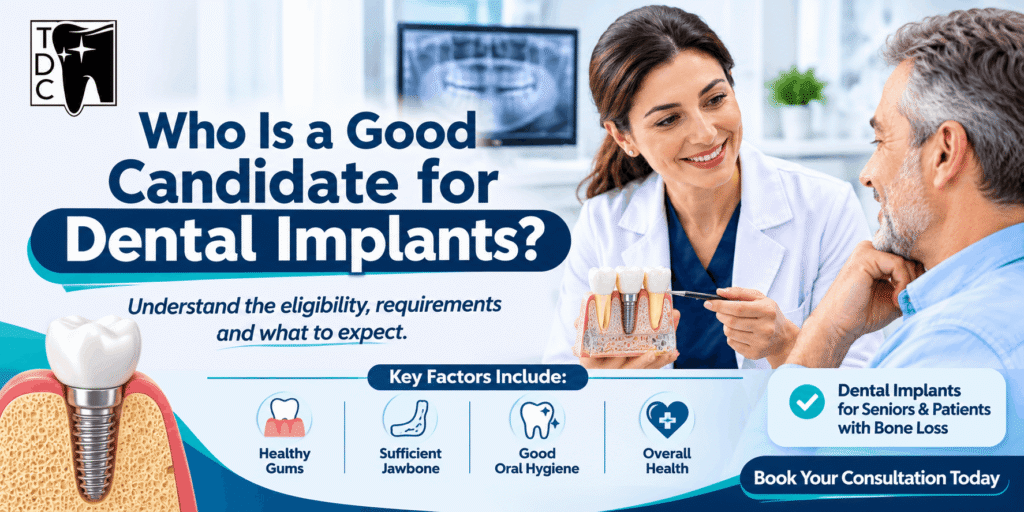
Generally, a suitable candidate is someone with one or more missing teeth, healthy or treatable gums, sufficient jawbone support and overall health that allows them to undergo the procedure and heal. Even if you have certain health conditions or bone loss, implants may still be possible with appropriate assessment and treatment planning.
At TDC Dental, a dental implant suitability assessment helps determine whether implants are appropriate for your individual needs and what steps may be required before treatment.
What Makes Someone a Good Dental Implant Candidate?
There is no single checklist that guarantees eligibility. Your dentist considers several clinical factors before recommending dental implant treatment.
A potential candidate generally has the following characteristics:
- One or more missing teeth that need replacement.
- Healthy gums or gum disease that has been treated.
- Adequate jawbone volume to support the implant, or the possibility of improving bone support.
- Good oral hygiene habits.
- A medical history that has been reviewed for potential surgical and healing risks.
- Realistic expectations about the treatment process and maintenance.
Meeting these general dental implant requirements does not replace a professional examination. Your dentist needs to evaluate your individual circumstances before confirming suitability.
Dental Implant Eligibility: The Main Factors Your Dentist Evaluates
1. Healthy Gums
Healthy gum tissue is important for supporting dental implants. Gum disease can cause inflammation and damage the tissues and bone around teeth. If active gum disease is present, it may need to be treated before implant surgery.
After treatment, your dentist may recommend ongoing periodontal maintenance to help keep the gums healthy. This is important because inflammation around an implant can affect the surrounding tissues and may lead to peri-implant disease.
2. Sufficient Jawbone Support
Dental implants are placed into the jawbone, where they need to integrate with the surrounding bone. The amount and quality of available bone are therefore important considerations.
If you have experienced bone loss after losing a tooth, this does not necessarily mean implants are impossible. Your dentist may assess whether the available bone can support an implant or whether additional treatment, such as bone grafting, is appropriate.
3. Good Oral Hygiene
Implants require regular cleaning and professional maintenance. Although the implant itself cannot develop tooth decay, the gum and bone around it can still become inflamed or infected.
Candidates should be willing to maintain daily brushing, clean between their teeth and attend recommended dental check-ups.
4. General Health and Healing Capacity
Your medical history can influence how your body responds to surgery and heals afterwards. Certain medical conditions, medications and lifestyle factors may increase the risk of complications or require adjustments to the treatment plan.
Your dentist should know about your existing health conditions, previous surgeries, allergies and all medications or supplements you take.
Are Dental Implants Suitable for Seniors?
Age alone does not determine whether someone can receive dental implants. Many older adults may be suitable candidates, provided their oral health, bone condition and general health support treatment.
Dental implants for seniors may help replace missing teeth and provide support for chewing and everyday oral function. However, the assessment should consider factors that may be more common with increasing age, including:
- Reduced jawbone volume.
- Gum disease or a history of periodontal problems.
- Medical conditions that may affect healing.
- Medications that influence bone health or blood clotting.
- Difficulty maintaining oral hygiene independently.
Your dentist may also discuss whether a fixed or removable implant-supported restoration is more appropriate. The decision should be based on clinical findings, personal needs and the ability to maintain the restoration.
Can Patients with Bone Loss Get Dental Implants?
Bone loss is one of the factors that can make implant treatment more complex. When a tooth is lost, the jawbone in that area may gradually shrink because it no longer receives the same stimulation from the tooth root.
However, dental implants for patients with bone loss may still be possible. The available options depend on the amount and location of bone loss.
Bone Grafting
Bone grafting may be recommended when there is insufficient bone volume for the planned implant. A graft helps rebuild or augment the area, allowing it to develop enough support for implant placement.
The graft may be performed before implant surgery or, in selected cases, at the same time as implant placement. The appropriate approach depends on the clinical assessment.
Alternative Implant Planning
In some cases, the dentist may consider a different implant position, size or restoration design based on the available bone and anatomical structures. These decisions require careful examination and appropriate imaging.
Bone loss should therefore be assessed rather than treated as an automatic reason to rule out implants.
Are Dental Implants Suitable for Diabetic Patients?
People with diabetes may be able to receive dental implants, but blood glucose control and overall health are important considerations.
Dental implants for diabetic patients require careful planning because poorly controlled diabetes can affect wound healing and may increase the risk of infection and implant complications.
Before treatment, your dentist may consider:
- Whether blood glucose levels are reasonably controlled.
- The duration and management of diabetes.
- Any diabetes-related complications.
- Current medications and relevant medical history.
- Gum health and oral hygiene.
- Advice from your treating doctor, where appropriate.
Well-controlled diabetes does not automatically prevent someone from receiving implants. However, if diabetes is poorly controlled, your dentist may recommend improving medical management before proceeding.
Do not change diabetes medication or treatment without consulting your medical professional.
Other Medical Factors That May Affect Dental Implant Suitability
Several other health factors may influence implant planning. Having one of these conditions does not necessarily mean you cannot receive implants, but it should be discussed during your consultation.
Smoking and Tobacco Use
Smoking can impair blood flow and healing in the mouth. It may increase the risk of implant complications and affect long-term outcomes. Patients who smoke should discuss the risks and options for stopping or reducing tobacco use with their healthcare team.
Medications Affecting Bone Health
Some medications, including certain antiresorptive drugs used for osteoporosis or cancer-related conditions, can affect treatment planning because of the risk of medication-related osteonecrosis of the jaw. Your dentist needs to know which medication you take, its dose and why it was prescribed.
Never stop prescribed medication without speaking to the prescribing clinician.
Immune System Conditions
Some conditions or treatments that suppress the immune system may affect healing and infection risk. Your dentist may need to coordinate with your medical specialist before recommending surgery.
Previous Radiation Treatment
Radiation treatment involving the jaw or surrounding areas can affect bone healing and implant suitability. A detailed medical history and specialist assessment may be required.
Dental Implant Suitability Assessment: What Happens During a Consultation?
A dental implant suitability assessment helps your dentist understand your oral health and determine whether implant treatment is appropriate.
If you are considering a dental implant consultation in Deira, the assessment may include the following stages.
Step 1: Medical and Dental History
Your dentist will ask about missing teeth, previous dental treatment, medical conditions, medications, allergies and lifestyle factors. This information helps identify potential risks and determine whether further medical advice is needed.
Step 2: Oral Examination
Your teeth, gums, bite and the area where the implant may be placed will be examined. The dentist will look for signs of gum disease, infection, damage to nearby teeth and other issues that may need attention.
Step 3: Diagnostic Imaging
Dental X-rays or three-dimensional imaging, such as CBCT, may be recommended when clinically appropriate. These investigations help assess bone volume and the position of important anatomical structures.
Step 4: Treatment Options and Planning
Based on the findings, your dentist will explain whether you are suitable for implants, whether preparatory treatment is required and what alternatives may be available.
Step 5: Timeline, Costs and Aftercare
If implant treatment is appropriate, your dentist will discuss the proposed treatment stages, expected healing time, estimated costs and follow-up requirements.
The purpose of the consultation is not simply to approve or reject implant treatment. It is to identify the safest and most appropriate approach for your dental needs.
Who May Need Additional Treatment Before Dental Implants?
Some patients can proceed to implant placement after the initial assessment, while others may need preparatory treatment.
This may include:
- Gum disease treatment: To control inflammation and improve periodontal health.
- Tooth extraction: If a damaged or infected tooth needs to be removed.
- Bone grafting: To improve the amount of bone available for implant support.
- Treatment of oral infections: To address active infection before surgery.
- Medical review: To understand and manage health conditions that may affect healing.
The need for additional treatment depends on the clinical findings. Your dentist will explain how it may affect the overall treatment timeline.
Who May Not Be Ready for Dental Implants?
Some circumstances may mean that implant treatment should be delayed or may not be recommended.
Examples include:
- Untreated gum disease or active oral infection.
- Poorly controlled medical conditions that affect healing.
- Insufficient bone where suitable augmentation is not possible.
- Medical or medication-related risks that make surgery unsuitable.
- Inability to maintain the necessary oral hygiene and follow-up care.
In these situations, your dentist may recommend addressing the underlying issue first or considering an alternative tooth replacement option, such as a dental bridge or removable denture.
Find Out Whether Dental Implants Are Right for You at TDC Dental
Dental implant suitability depends on more than the number of missing teeth. Gum health, jawbone condition, medical history, healing capacity and oral hygiene all contribute to the decision.
Whether you are a senior, have experienced bone loss or manage a medical condition such as diabetes, a professional assessment can help clarify your options.
If you are considering dental implants in Deira, contact TDC Dental to arrange a consultation. Your dentist can assess your oral health, discuss your eligibility and recommend a treatment plan based on your individual requirements.
Frequently Asked Questions
How do I know if I am a good dental implant candidate?
You may be a potential candidate if you have missing teeth, healthy or treatable gums, sufficient jawbone support and general health that allows you to undergo surgery and heal. A dental examination and appropriate imaging are needed to confirm suitability.
What are the main dental implant requirements?
Common requirements include healthy gums, adequate jawbone support, good oral hygiene and a medical history that has been assessed for potential risks. Additional treatment may be needed before implant placement.
Can seniors get dental implants?
Yes. Age alone does not disqualify someone from receiving implants. Older adults can be suitable candidates if their oral and general health support treatment.
Can I get dental implants if I have bone loss?
Possibly. Bone grafting or alternative treatment planning may help some patients with reduced jawbone volume. Your dentist will assess the available bone and explain the options.
Are dental implants safe for diabetic patients?
People with diabetes may be suitable for implants, particularly when their condition is well controlled. Poorly controlled blood glucose can affect healing and increase complication risks, so medical and dental assessment is important.
Do I need a dental implant consultation before treatment?
Yes. A consultation allows your dentist to examine your oral health, review your medical history, assess your jawbone and discuss suitable treatment options before surgery is planned.
What happens if I am not suitable for dental implants?
Your dentist may recommend treating an underlying problem first, considering bone grafting or discussing alternatives such as a dental bridge or removable denture. The most appropriate option depends on your individual needs.