Location: Office 408, Warba Center, Al-Muraqqabat, Deira, Dubai

Support mail: Info@tdcdental.ae

Location: Office 408, Warba Center, Al-Muraqqabat, Deira, Dubai

Support mail: Info@tdcdental.ae

missing tooth replacement options Deira

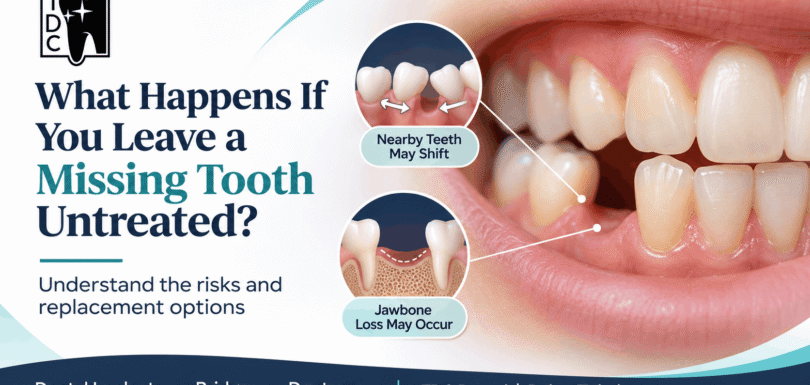
What Happens If You Leave a Missing Tooth Untreated?

What Happens If You Leave a Missing Tooth Untreated? Losing a tooth can affect more than the appearance of your smile. Even when the gap is not visible, a missing tooth may influence how you chew, how neighbouring teeth are positioned and how your bite functions. Over time, the surrounding jawbone may also change because it no longer receives stimulation from the missing tooth root. Some people delay treatment because they do not experience pain or believe that a single missing tooth will not cause significant problems. However, the consequences of missing teeth can develop gradually, making it important to understand the potential effects and available treatment options. If you have lost a tooth due to decay, gum disease, injury or extraction, appropriate missing tooth treatment can help restore function and prevent certain complications. At TDC Dental, patients can discuss suitable replacement options based on their oral health, the location of the missing tooth and their individual treatment needs. What Happens When You Leave a Missing Tooth Untreated? The effects of an untreated missing tooth vary depending on its location, the condition of surrounding teeth and how your bite functions. Not everyone will experience every complication, but several changes may occur over time. 1. Nearby Teeth May Shift Your teeth help maintain one another’s position within the dental arch. When a tooth is missing, the neighbouring teeth may gradually move or tilt towards the empty space. This movement can affect the alignment of your teeth and create changes in your bite. It may also make certain areas more difficult to clean, increasing the risk of plaque accumulation and gum problems. The opposing tooth may also move into the space if there is no tooth above or below it to maintain contact. This is known as over-eruption. Also Read More – Who Is a Good Candidate for Dental Implants? 2. Jawbone Loss May Occur One of the important consequences of missing teeth is the gradual loss of bone in the area where the tooth was located. Natural tooth roots stimulate the surrounding jawbone during chewing. When a tooth is lost, this stimulation decreases, and the bone may gradually shrink. The amount of bone change varies between individuals and depends on factors such as the reason for tooth loss, the location of the missing tooth and the time since extraction. Bone loss can sometimes make future dental implant treatment more complex because sufficient bone is needed to support an implant. In selected cases, bone grafting may be considered. 3. Chewing and Eating May Become Difficult Missing teeth can affect your ability to bite and chew food comfortably. This is particularly noticeable when molars or several teeth are missing because these teeth play an important role in grinding food. You may begin chewing more on one side of your mouth to avoid the gap or areas of discomfort. This can change your normal chewing pattern and place additional pressure on the remaining teeth. If eating becomes difficult, it may also affect the range of foods you feel comfortable consuming. 4. Your Bite May Change Your upper and lower teeth work together to distribute chewing forces. A missing tooth can change how these teeth meet, particularly if neighbouring or opposing teeth begin to move. Changes in your bite may contribute to uneven pressure on certain teeth. Some people may notice discomfort when chewing or changes in how their teeth come together. A dental examination can help identify whether the missing tooth has affected your bite and whether treatment is recommended. 5. Food May Become Trapped More Easily Gaps between teeth can allow food to collect around the missing tooth space or between neighbouring teeth. If these areas are difficult to clean, plaque can accumulate and contribute to gum inflammation or tooth decay in the remaining teeth. Maintaining good oral hygiene is important, but brushing alone may not address all the changes caused by an untreated gap. 6. Your Smile and Confidence May Be Affected A missing front tooth can be noticeable when speaking or smiling. Even a missing back tooth, which is less visible, may affect confidence or make you feel uncomfortable about your appearance. Replacing a missing tooth can help restore the appearance of your smile while also addressing functional concerns. Can One Missing Tooth Cause Problems? Yes. Even a single missing tooth can affect the surrounding dental structures, depending on its location and the condition of your remaining teeth. For example: The impact is not always immediate. Some people experience no noticeable symptoms for a while, but this does not mean that the gap has no effect on their oral health. If you want to replace one missing tooth, a dentist can assess the space, surrounding teeth, gum condition and jawbone before recommending treatment. When Should You Consider Missing Tooth Treatment? It is worth arranging a dental assessment after losing a tooth, even if the area feels comfortable. You may need missing tooth treatment if: The right time to replace a tooth depends on your clinical condition. In some situations, treatment may be planned soon after extraction. In others, the dentist may recommend allowing the area to heal first. Missing Tooth Replacement Options in Deira There are several ways to replace a missing tooth. The most appropriate option depends on how many teeth are missing, the condition of your gums and jawbone, your bite and your treatment preferences. 1. Dental Implants A dental implant is a small post placed into the jawbone to act as an artificial tooth root. After the implant integrates with the bone, a crown can be attached to replace the visible part of the missing tooth. Implants can be used to replace a single tooth without relying on neighbouring teeth for support. They may also support bridges or dentures when several teeth are missing. Potential benefits include: However, implants require surgery and sufficient bone support. Some patients may need additional procedures, such as bone grafting. They also require regular cleaning and professional maintenance. 2. Dental Bridges A
Continue Reading
Dental Implant Candidate Dubai

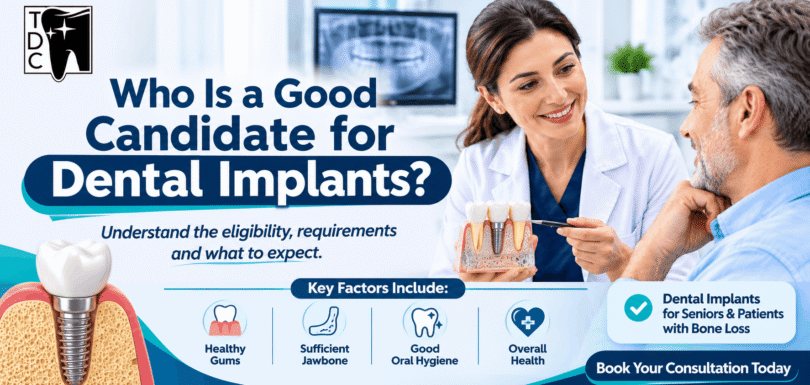
Who Is a Good Candidate for Dental Implants?

Who Is a Good Candidate for Dental Implants? Dental implants are a widely used option for replacing missing teeth. They provide a foundation for a replacement crown, bridge or denture and are designed to function as part of your bite. However, dental implants are not automatically suitable for everyone. Your oral health, jawbone condition, medical history and ability to maintain good hygiene all influence whether treatment is appropriate. So, who is a good dental implant candidate? Generally, a suitable candidate is someone with one or more missing teeth, healthy or treatable gums, sufficient jawbone support and overall health that allows them to undergo the procedure and heal. Even if you have certain health conditions or bone loss, implants may still be possible with appropriate assessment and treatment planning. At TDC Dental, a dental implant suitability assessment helps determine whether implants are appropriate for your individual needs and what steps may be required before treatment. What Makes Someone a Good Dental Implant Candidate? There is no single checklist that guarantees eligibility. Your dentist considers several clinical factors before recommending dental implant treatment. A potential candidate generally has the following characteristics: Meeting these general dental implant requirements does not replace a professional examination. Your dentist needs to evaluate your individual circumstances before confirming suitability. Dental Implant Eligibility: The Main Factors Your Dentist Evaluates 1. Healthy Gums Healthy gum tissue is important for supporting dental implants. Gum disease can cause inflammation and damage the tissues and bone around teeth. If active gum disease is present, it may need to be treated before implant surgery. After treatment, your dentist may recommend ongoing periodontal maintenance to help keep the gums healthy. This is important because inflammation around an implant can affect the surrounding tissues and may lead to peri-implant disease. 2. Sufficient Jawbone Support Dental implants are placed into the jawbone, where they need to integrate with the surrounding bone. The amount and quality of available bone are therefore important considerations. If you have experienced bone loss after losing a tooth, this does not necessarily mean implants are impossible. Your dentist may assess whether the available bone can support an implant or whether additional treatment, such as bone grafting, is appropriate. 3. Good Oral Hygiene Implants require regular cleaning and professional maintenance. Although the implant itself cannot develop tooth decay, the gum and bone around it can still become inflamed or infected. Candidates should be willing to maintain daily brushing, clean between their teeth and attend recommended dental check-ups. 4. General Health and Healing Capacity Your medical history can influence how your body responds to surgery and heals afterwards. Certain medical conditions, medications and lifestyle factors may increase the risk of complications or require adjustments to the treatment plan. Your dentist should know about your existing health conditions, previous surgeries, allergies and all medications or supplements you take. Are Dental Implants Suitable for Seniors? Age alone does not determine whether someone can receive dental implants. Many older adults may be suitable candidates, provided their oral health, bone condition and general health support treatment. Dental implants for seniors may help replace missing teeth and provide support for chewing and everyday oral function. However, the assessment should consider factors that may be more common with increasing age, including: Your dentist may also discuss whether a fixed or removable implant-supported restoration is more appropriate. The decision should be based on clinical findings, personal needs and the ability to maintain the restoration. Can Patients with Bone Loss Get Dental Implants? Bone loss is one of the factors that can make implant treatment more complex. When a tooth is lost, the jawbone in that area may gradually shrink because it no longer receives the same stimulation from the tooth root. However, dental implants for patients with bone loss may still be possible. The available options depend on the amount and location of bone loss. Bone Grafting Bone grafting may be recommended when there is insufficient bone volume for the planned implant. A graft helps rebuild or augment the area, allowing it to develop enough support for implant placement. The graft may be performed before implant surgery or, in selected cases, at the same time as implant placement. The appropriate approach depends on the clinical assessment. Alternative Implant Planning In some cases, the dentist may consider a different implant position, size or restoration design based on the available bone and anatomical structures. These decisions require careful examination and appropriate imaging. Bone loss should therefore be assessed rather than treated as an automatic reason to rule out implants. Are Dental Implants Suitable for Diabetic Patients? People with diabetes may be able to receive dental implants, but blood glucose control and overall health are important considerations. Dental implants for diabetic patients require careful planning because poorly controlled diabetes can affect wound healing and may increase the risk of infection and implant complications. Before treatment, your dentist may consider: Well-controlled diabetes does not automatically prevent someone from receiving implants. However, if diabetes is poorly controlled, your dentist may recommend improving medical management before proceeding. Do not change diabetes medication or treatment without consulting your medical professional. Other Medical Factors That May Affect Dental Implant Suitability Several other health factors may influence implant planning. Having one of these conditions does not necessarily mean you cannot receive implants, but it should be discussed during your consultation. Smoking and Tobacco Use Smoking can impair blood flow and healing in the mouth. It may increase the risk of implant complications and affect long-term outcomes. Patients who smoke should discuss the risks and options for stopping or reducing tobacco use with their healthcare team. Medications Affecting Bone Health Some medications, including certain antiresorptive drugs used for osteoporosis or cancer-related conditions, can affect treatment planning because of the risk of medication-related osteonecrosis of the jaw. Your dentist needs to know which medication you take, its dose and why it was prescribed. Never stop prescribed medication without speaking to the prescribing clinician. Immune System Conditions Some conditions or treatments that
Continue Reading
Dental Implant Healing Dubai

How Long Does a Dental Implant Take to Heal?

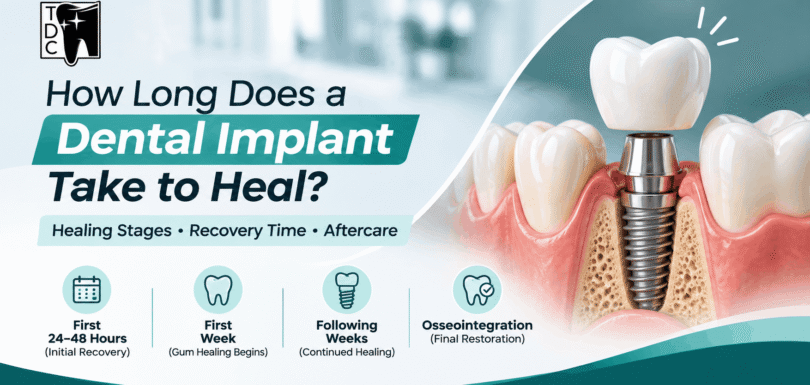
How Long Does a Dental Implant Take to Heal? Dental implants are designed to replace missing teeth by providing a stable foundation for a crown, bridge or denture. Although implant placement may be completed in a single appointment, healing takes longer because the implant needs to integrate with the surrounding jawbone before the final restoration can be fitted. The dental implant healing time varies from person to person. It depends on factors such as bone quality, the location of the implant, overall health and whether additional procedures—such as bone grafting—are required. Understanding the dental implant healing stages can help you prepare for recovery, follow your dentist’s instructions and recognise when you may need professional advice. How Long Is the Dental Implant Healing Time? In many cases, the implant needs several months to integrate with the jawbone. The exact timeline depends on your clinical situation, and your dentist will assess healing before proceeding with the final restoration. It is useful to distinguish between two stages: A straightforward case may progress more quickly than treatment involving bone grafting, extraction or other preparatory procedures. Your dentist will explain the expected timeline for your treatment. Dental Implant Healing Stages Stage 1: The First 24–48 Hours The first couple of days are focused on protecting the surgical site and managing normal post-operative symptoms. Some swelling, bruising, tenderness or minor bleeding may occur. Follow the instructions provided by your dental team. These may include resting, using a cold compress as directed, eating soft foods and avoiding activities that could disturb the surgical area. Avoid touching the implant site with your fingers or tongue, and do not rinse vigorously unless your dentist has instructed you to do so. Stage 2: The First Week During the first week, discomfort and swelling should generally begin to settle. The gum tissue starts healing around the surgical site, although the implant is still integrating with the bone. Continue gentle oral hygiene and follow any instructions about rinsing, brushing and prescribed medication. Attend your scheduled review if one has been arranged. If symptoms become more severe rather than gradually improving, contact your dental team for advice. Stage 3: The Following Weeks Over the next several weeks, the gum tissue continues to heal while the bone integration process progresses. You may feel increasingly comfortable, but this does not necessarily mean the implant is ready for normal loading. Your dentist may recommend avoiding hard or crunchy foods near the implant or limiting pressure on a temporary restoration. Follow the advice specific to your implant and bite. Stage 4: Osseointegration and Final Restoration Osseointegration is the process by which bone grows around and bonds with the implant surface. This provides the support needed for the final crown, bridge or denture. The timing varies depending on bone quality, implant location and whether grafting was performed. Once your dentist confirms that the implant has healed sufficiently, the restorative stage can proceed. This may involve taking impressions or digital scans, fitting an abutment and attaching the final restoration. How Long After a Dental Implant Can I Eat? You can usually begin with soft, cool or lukewarm foods once you are comfortable and the numbness from anaesthesia has worn off. The exact instructions depend on the procedure and your dentist’s recommendations. Foods to Choose During Early Recovery During the initial recovery period, softer foods may be easier to eat and less likely to disturb the surgical area. Examples include: Avoid chewing directly over the implant site until your dentist says it is safe. Hard, crunchy, sticky or very hot foods may irritate the area or place unwanted pressure on the healing tissues. When Can You Return to Your Normal Diet? Many patients gradually return to a more varied diet as tenderness improves. However, the implant may still be integrating with the bone even after the gum feels comfortable. Your dentist will advise when to resume harder foods based on the implant’s stability, the type of restoration and your healing progress. Do not use the absence of pain as the only indication that the implant is ready for full chewing pressure. Dental Implant Recovery Time: What Can Affect It? Several factors can influence dental implant recovery time: Bone Quality and Implant Location The amount and quality of available bone can affect how the implant integrates. Implants in different areas of the mouth may also experience different chewing forces. Bone Grafting or Additional Procedures If bone grafting is required, healing may take longer because the grafted area needs time to mature before or alongside implant treatment. The timing depends on the type and extent of grafting and the individual’s healing response. Oral Hygiene and Gum Health Keeping the mouth clean helps support healthy healing. Existing gum disease should be assessed and managed, and patients should follow the recommended cleaning routine around the implant. General Health and Lifestyle Certain medical conditions, medications and lifestyle factors—including smoking—may affect healing. Tell your dentist about your medical history and all medications you take so your treatment plan can account for relevant risks. Bone Graft Healing Before Dental Implants Some patients do not have enough jawbone to support an implant in the planned position. In these cases, a dentist may recommend bone grafting to rebuild or augment the area. Depending on the clinical situation, the graft may be placed before implant surgery or at the same time as implant placement. If grafting is performed first, the area may need several months to heal before the implant can be placed. The required healing period depends on the size and location of the graft, the material used and the patient’s response. Your dentist will assess the site and determine when it is ready for the next stage. Dental Implant Aftercare in Dubai: How to Support Healing Following appropriate dental implant aftercare can help protect the surgical site and support recovery. Your dentist will provide instructions tailored to your procedure. Keep the Area Clean Brush your teeth carefully and follow your dentist’s guidance on cleaning around the implant.
Continue Reading
TDC Dental Implant in Dubai

Dental Implant Procedure: Step-by-Step Guide for Patients

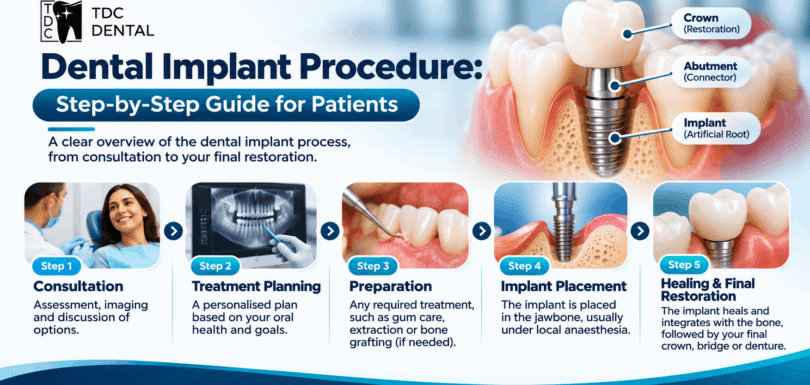
Dental Implant Procedure: Step-by-Step Guide for Patients Replacing a missing tooth can help restore your ability to chew comfortably, support your bite and improve the appearance of your smile. Dental implants are one option for replacing missing teeth. They use a small implant placed in the jawbone to support a crown, bridge or denture. If you are considering a dental implant procedure, understanding each stage can help you prepare and know what to expect. Treatment typically involves an initial assessment, planning, implant placement, a healing period and the fitting of the final restoration. The exact process depends on your oral health, the number of teeth being replaced and whether additional procedures are needed. At TDC Dental, patients can discuss their tooth replacement options and receive an individualised treatment plan based on their dental needs. What Is a Dental Implant Procedure? A dental implant procedure involves placing a small post, usually made of titanium or another biocompatible material, into the jawbone to replace the root of a missing tooth. As the area heals, the implant can integrate with the surrounding bone. Once it is ready, a replacement tooth is attached. A typical implant restoration has three parts: Dental implants may support a single crown, a bridge replacing several teeth or a denture. Your dentist will recommend an approach after assessing your oral health and treatment goals. Step 1: Dental Implant Consultation in Dubai The first stage is a dental implant consultation. Your dentist reviews your dental and medical history, examines your mouth and discusses your concerns, expectations and available treatment options. The assessment may include: This appointment helps determine whether implants are suitable for you and whether preparatory treatment may be needed. For example, gum disease may need to be treated before implant placement. If there is insufficient bone to support an implant, your dentist may discuss bone grafting or other options. Step 2: Personalised Treatment Planning After the assessment, your dentist develops a treatment plan based on your individual needs. Planning helps determine the implant position, the type of restoration and the sequence of procedures. Your plan may consider: The treatment plan should also explain the expected timeline, appointments, aftercare and estimated fees. These details can vary between patients, so the dental implant procedure cost in Dubai should be discussed after your clinical assessment rather than assumed from a general price. Step 3: Preparing for Dental Implant Surgery Some patients can proceed directly to implant placement. Others may need preparatory treatment to create a healthy foundation. Depending on your situation, preparation may involve treating gum disease, removing a damaged tooth, allowing an extraction site to heal or performing a bone graft. Not every patient needs these procedures. Your dental team will provide instructions before surgery. These may include guidance about eating, medications, oral hygiene and arranging transport if sedation is planned. Follow the instructions provided for your specific procedure. Step 4: Dental Implant Placement Dental implant surgery is generally performed under local anaesthesia. Sedation may be available in suitable cases, depending on the clinical setting and your needs. During implant placement, the dentist prepares the site in the jawbone and positions the implant. The gum tissue is then managed to protect the surgical area during healing. The procedure may be completed in one visit for a single implant, although more complex cases can require additional appointments. You may feel pressure or vibration during the procedure, but local anaesthesia is used to reduce pain. Your dentist can explain what sensations are normal and how to let the team know if you feel discomfort. In some cases, a temporary tooth may be provided for appearance or function. Whether this is possible depends on the implant’s stability, the location and your treatment plan. A temporary restoration is not suitable for every patient. Step 5: Healing and Osseointegration After implant placement, the implant needs time to integrate with the surrounding jawbone. This process is called osseointegration. It helps provide the support needed for the final restoration. The healing period varies according to the individual, the implant site, bone quality and whether additional procedures were performed. Your dentist will monitor healing and determine when the implant is ready for the next stage. During recovery, it is important to follow the aftercare instructions, maintain gentle oral hygiene around the area and attend scheduled reviews. Avoid putting excessive pressure on the implant while it heals, unless your dentist has advised otherwise. Step 6: Attaching the Abutment and Final Restoration Once the implant has healed sufficiently, the dentist can proceed with the restorative stage. Depending on the treatment plan, this may involve placing or exposing the abutment and taking impressions or digital scans of the implant area. These records help create a restoration designed to fit your bite and surrounding teeth. The final crown, bridge or denture is then attached to the implant or implants. Your dentist checks the fit, appearance and bite, and makes adjustments when needed. The goal is to provide a restoration that functions comfortably and can be maintained with appropriate oral hygiene and regular dental care. Step 7: Follow-Up and Long-Term Maintenance Dental implants require ongoing care, just like natural teeth. Although the implant itself cannot develop tooth decay, the surrounding gum and bone can still be affected by inflammation or infection. To help maintain your implant: Your dentist may recommend a personalised maintenance schedule based on your oral health and implant restoration. Dental Implant Surgery Recovery Time Dental implant surgery recovery time differs from person to person. Some tenderness, swelling, bruising or minor bleeding may occur after surgery. These symptoms are often most noticeable during the first few days and should gradually improve. Your dentist will provide instructions for managing discomfort and caring for the surgical site. Recommendations may include eating soft foods temporarily, avoiding strenuous activity for a short period and keeping the area clean without disturbing it. Contact your dental team if symptoms worsen rather than improve, or if you develop significant swelling, persistent bleeding, fever or severe pain. Follow
Continue Reading
Best Dental Treatment in Dubai

Are Dental Implants Painful? What to Expect During and After Treatment

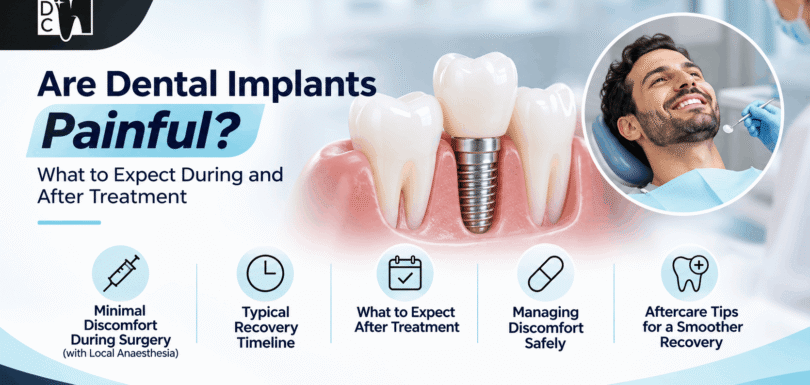
Are Dental Implants Painful? What to Expect During and After Treatment If you are considering dental implants to replace missing teeth, it is natural to wonder whether the procedure will hurt. Concerns about pain, surgery and recovery can make patients hesitant, even when they understand the benefits of replacing missing teeth. So, are dental implants painful? Most patients experience little or no pain during implant placement because the procedure is performed under local anaesthesia. Some discomfort, swelling or tenderness may occur after the anaesthetic wears off, but these symptoms are usually manageable and improve as healing progresses. The level of discomfort varies depending on the number of implants placed, the complexity of the procedure, individual pain sensitivity and whether additional treatment, such as bone grafting, is required. At TDC Dental, patients can enquire about dental implant treatment in Dubai and discuss their concerns before proceeding. This guide explains what implant surgery feels like, what to expect during recovery and how to manage discomfort safely. Are Dental Implants Painful During Surgery? Dental implant placement is generally performed using local anaesthesia to numb the treatment area. This means you should not feel sharp pain during the procedure, although you may notice pressure, movement or vibration. The experience can vary depending on the treatment required. A straightforward implant placement may involve less discomfort than a more complex procedure involving multiple implants, tooth extraction or bone grafting. What Is a Dental Implant Procedure With Local Anaesthesia Like? A dental implant procedure with local anaesthesia typically involves the following steps: You may feel pressure or vibration during some stages, but sharp pain should not be expected. If you feel pain during treatment, tell your dentist immediately so they can assess the anaesthesia and provide additional measures if necessary. Can You Be Awake During Dental Implant Surgery? Yes. Most dental implant procedures are performed while the patient is awake under local anaesthesia. For patients who experience significant dental anxiety, additional options may be available depending on the clinic, procedure and medical suitability. Discuss anxiety or concerns with your dentist before treatment so that appropriate arrangements can be considered. What Does Dental Implant Pain After Surgery Feel Like? Dental implant pain after surgery commonly involves mild to moderate soreness around the implant site once the local anaesthetic wears off. Patients may experience: These symptoms are part of the body’s normal healing response and generally improve over the first several days. The amount of discomfort depends on the procedure. A single implant placement may involve relatively limited soreness, while multiple implants or additional surgery may result in more noticeable swelling and tenderness. How Long Does Dental Implant Pain Last? Discomfort after implant surgery usually follows a gradual recovery pattern. Recovery period What you may experience First few hours Numbness from local anaesthesia; discomfort may begin as it wears off First 24–48 hours Swelling, tenderness and mild to moderate soreness may become more noticeable Days 3–5 Symptoms generally begin to improve Days 5–7 Many patients experience substantially less discomfort Following weeks The implant continues healing and integrating with the jawbone, usually with little ongoing pain Recovery varies between patients. Additional procedures, such as bone grafting, can extend the period of swelling and discomfort. If pain becomes more severe rather than gradually improving, or if new symptoms develop, contact your dentist for assessment. What Is Dental Implant Recovery Like in Dubai? The dental implant recovery Dubai patients experience depends on their treatment plan, general health and individual healing response. Most patients can return to many normal daily activities relatively soon after straightforward implant placement, although strenuous exercise may need to be avoided temporarily. The First 24 Hours During the first day, the surgical area may feel tender as the anaesthetic wears off. To support healing: A small amount of blood-stained saliva may occur initially. Persistent or heavy bleeding should be assessed promptly. Days 2–3 Swelling and tenderness may be more noticeable during the first few days. This does not necessarily indicate a complication, provided symptoms remain within the expected range and begin to improve. Continue eating foods that are comfortable to chew and avoid placing unnecessary pressure on the implant site. Days 4–7 Many patients notice a gradual reduction in swelling and discomfort during this period. Continue following the recommended oral hygiene routine and attend any scheduled follow-up appointment. If stitches were placed, your dentist will explain whether and when they need to be removed. The Following Weeks and Months Although the gum tissue may heal relatively quickly, the implant needs additional time to integrate with the jawbone. The healing period varies according to the implant location, bone quality and whether additional procedures were performed. Your dentist will determine when the implant is ready to support its final restoration. How to Manage Dental Implant Surgery Discomfort Some dental implant surgery discomfort is expected after treatment, but several measures may help make recovery more comfortable. Follow Your Dentist’s Medication Instructions Your dentist may recommend or prescribe medication to manage pain and, when appropriate, other aspects of recovery. Take medication only as directed. Do not exceed recommended doses or combine medicines without checking with your dentist or pharmacist. Antibiotics are not required for every patient and should only be taken when prescribed. Use a Cold Compress A cold compress applied externally to the cheek may help reduce swelling during the early recovery period. Follow your dentist’s instructions regarding when and how long to apply it. Avoid placing ice directly against the skin. Choose Soft Foods During the initial healing period, choose foods that are easy to chew and do not place excessive pressure on the surgical site. Suitable options may include: Avoid very hard, crunchy or sticky foods near the implant site until your dentist advises that it is safe to resume them. Rest and Avoid Smoking Rest can support recovery, particularly during the first day or two. Avoid strenuous exercise for the period recommended by your dentist. Smoking can interfere with healing and increase the risk of implant complications. Avoid
Continue Reading

How Long Do Dental Implants Last? What Patients Should Know

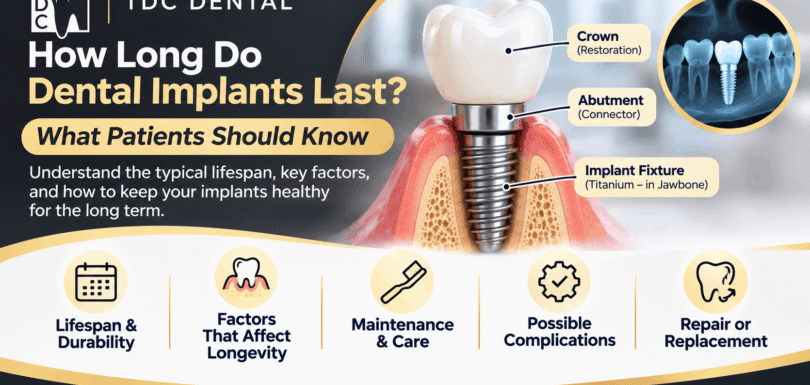
How Long Do Dental Implants Last? What Patients Should Know Dental implants are a widely used option for replacing missing teeth. They are designed to provide a stable foundation for replacement teeth, helping restore chewing function, appearance and confidence. However, one of the most common questions patients ask before choosing this treatment is: how long do dental implants last? Dental implants can last for many years and, in suitable circumstances, may remain functional for decades. Their long-term success depends on several factors, including oral hygiene, gum health, bone condition, lifestyle habits, the quality of the restoration and regular professional care. It is also important to understand that the implant itself and the crown attached to it do not necessarily have the same lifespan. The implant fixture may remain stable in the jawbone while the visible crown or another component eventually needs repair or replacement. At TDC Dental, patients can enquire about dental implant treatment and ongoing oral care in Dubai. This guide explains the expected dental implant lifespan, the factors that influence longevity, how to maintain implants and when professional assessment may be necessary. How Long Do Dental Implants Last on Average? The dental implant lifespan varies from patient to patient. A successfully integrated implant can remain functional for many years, sometimes decades, when supported by healthy gums and bone and maintained appropriately. There is no guaranteed lifespan that applies to every patient. Some implants develop complications, while others continue functioning for a very long time. When considering how long dental implants last, it is useful to distinguish between the implant fixture and the restoration it supports. Dental implant component What affects its lifespan? Implant fixture Bone integration, gum health, smoking, medical factors, bite forces and oral hygiene Abutment Mechanical stress, component condition, restoration design and maintenance Dental crown Wear, fracture, material, biting forces and oral habits Implant-supported bridge Design, cleaning, component condition, bite forces and maintenance Implant-supported denture Attachment wear, denture condition, implant health and maintenance The implant fixture is the part placed in the jawbone. The crown, bridge or denture is the restoration that replaces the missing tooth or teeth. These components experience different types of stress and may need maintenance or replacement at different times. How Long Do Titanium Dental Implants Last? Titanium is widely used in dental implant systems because it is biocompatible and can integrate with the surrounding bone through a process called osseointegration. When patients ask how long do titanium dental implants last, the answer depends on more than the material alone. Implant design, surgical placement, bone health, gum health and ongoing maintenance all contribute to the outcome. A titanium implant that integrates successfully and remains surrounded by healthy tissues may function for decades. However, titanium does not make an implant immune to complications. Potential problems include inflammation around the implant, progressive bone loss, mechanical damage and failure of the implant to remain stable. What Is Osseointegration? Osseointegration occurs when the bone forms a stable connection with the implant surface. This connection allows the implant to support a crown or other restoration during chewing. Healing time varies depending on the patient’s bone condition, the implant location and whether additional procedures are required. During the healing period, your dentist may recommend specific precautions to avoid placing excessive force on the implant before it is ready for restoration. Successful osseointegration is an important milestone, but long-term success also requires healthy gums, suitable bite forces and consistent oral hygiene. Do Dental Implants Last Longer Than Dental Crowns? The implant fixture and its crown serve different purposes, so their expected lifespans should be considered separately. The implant fixture is anchored in the jawbone, while the crown is exposed to everyday chewing forces, food and potential wear. As a result, the crown may require repair or replacement even when the implant remains healthy. For example, a crown may become worn, chipped or damaged by excessive biting forces. In such circumstances, a dentist may be able to replace the crown without removing a stable implant fixture. The treatment required depends on the nature of the problem. A loose or damaged crown is not the same as an implant that has lost its integration with the bone. This distinction is important when assessing long-term value and planning for future dental maintenance. What Factors Affect Dental Implant Lifespan? Several factors affecting dental implant lifespan can be influenced by daily habits, professional care and appropriate treatment planning. Others, such as certain medical conditions or anatomical limitations, require individual assessment. 1. Oral Hygiene and Plaque Control Keeping the teeth, gums and implant restorations clean is essential for long-term implant health. Plaque can accumulate around the implant crown and gumline. If it is not removed effectively, the surrounding tissues may become inflamed. Brush twice daily using fluoride toothpaste and a suitable toothbrush. Clean between the teeth and around implant-supported restorations with appropriate interdental cleaning aids recommended by your dentist. Good oral hygiene helps reduce the risk of inflammation and supports the health of the tissues around the implant. 2. Gum Health and Peri-Implant Disease The tissues surrounding an implant need regular monitoring. Inflammation around an implant is known as peri-implant mucositis when it affects the soft tissues without progressive supporting bone loss. If inflammation progresses and supporting bone is lost, the condition may be classified as peri-implantitis. Warning signs can include redness, bleeding, swelling, tenderness or discharge around an implant. Some patients may experience few noticeable symptoms in the early stages. If you notice these changes, arrange a dental assessment rather than waiting for discomfort to develop. Early identification and appropriate management can help protect the tissues supporting the implant. 3. Smoking and Tobacco Use Smoking is associated with a higher risk of complications in dental implant treatment, including impaired healing and problems affecting the surrounding tissues. Tobacco use can also contribute to gum disease and make long-term oral health more difficult to maintain. If you smoke or use other tobacco products, discuss this with your dentist before implant treatment. They can explain how
Continue Reading
Dental Implants vs Dentures Guide

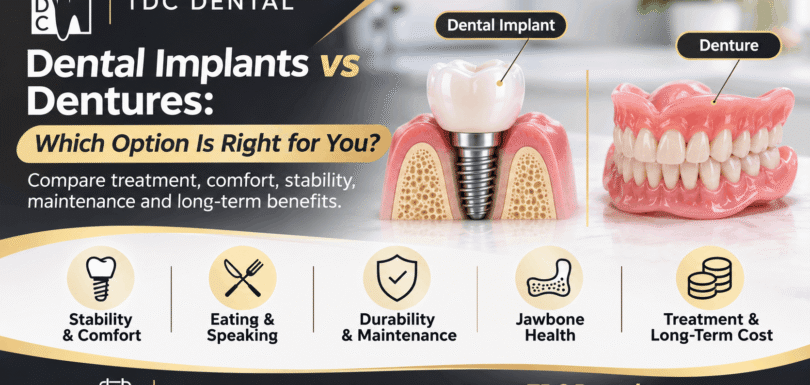
Dental Implants vs Dentures: Which Option Is Right for You?

Dental Implants vs Dentures: Which Option Is Right for You? Missing teeth can affect how you eat, speak and feel about your smile. Whether you have lost a single tooth or several teeth, choosing an appropriate replacement can help restore oral function and improve your quality of life. Two commonly considered solutions are dental implants and dentures. However, understanding the differences between them is essential before deciding which treatment may suit your needs. When comparing dental implants vs dentures, it is important to look beyond the initial price. Factors such as jawbone health, comfort, stability, maintenance, treatment time and long-term costs can influence your decision. Dental implants are placed in the jawbone to support replacement teeth, while conventional dentures are removable appliances designed to replace missing teeth and surrounding structures. Implant-supported dentures combine aspects of both approaches by using dental implants to improve the stability of a denture. At TDC Dental, patients can enquire about available tooth replacement options and discuss their individual needs with the dental team. This guide explains how dental implants and dentures differ, what affects their costs and which factors to consider when selecting a tooth replacement solution in Dubai. What Is the Difference Between Dental Implants and Dentures? Dental implants and dentures replace missing teeth in different ways. The most suitable choice depends on the number of missing teeth, your oral health, bone condition, preferences and budget. What Are Dental Implants? Dental implants are small fixtures, commonly made from titanium or other suitable materials, that are surgically placed in the jawbone. Over time, the implant can integrate with the surrounding bone and provide support for a replacement tooth or a larger dental restoration. A typical single-tooth implant restoration includes three components: For patients missing several teeth, multiple implants may support individual crowns or a dental bridge. In selected cases, implants can also support a full-arch restoration. Dental implants are generally fixed in place and are not removed by the patient during routine cleaning. However, they require regular oral hygiene and professional maintenance. What Are Dentures? Dentures are removable dental appliances that replace missing teeth. They can be designed to replace some teeth or an entire arch. There are two main types of conventional dentures. Partial dentures replace several missing teeth while fitting around remaining natural teeth. Complete dentures replace all teeth in the upper jaw, lower jaw or both. Dentures may use a gum-coloured base and artificial teeth to create a natural-looking appearance. Depending on their design and the shape of the mouth, they are supported by the gums, underlying tissues and, in some cases, attachments to remaining teeth. Conventional dentures can be removed for cleaning and are usually less invasive to fit than dental implants. However, they may require adjustments as the mouth changes over time. Dental Implants vs Dentures: Key Differences Understanding the practical differences between these treatments can help you decide which questions to discuss with your dentist. Feature Dental implants Conventional dentures Support Anchored in the jawbone Supported mainly by gums and oral tissues Removability Generally fixed in place Removed for cleaning Treatment process Usually involves surgery Usually involves impressions, fitting and adjustments Stability Can provide strong stability when successfully integrated Stability varies with fit, anatomy and denture design Bone preservation Helps maintain loading in the bone around the implant; does not prevent all bone loss Does not provide the same direct bone loading and cannot prevent ongoing jawbone resorption Maintenance Daily cleaning and regular professional reviews Daily removal and cleaning, with periodic adjustments or replacement Treatment time May take several months, depending on healing and additional procedures Often completed over weeks, depending on the case Initial cost Generally higher Generally lower Long-term costs May include maintenance and component or crown replacement May include relining, repairs and replacement Suitability Depends on bone health, oral health and medical factors May suit a wider range of patients, although fit and oral conditions still matter Neither option is automatically the best choice for everyone. Your dentist can assess your circumstances and explain the benefits, limitations and alternatives. Dental Implants or Dentures: Which Costs More? The dental implants or dentures cost comparison depends on the number of teeth being replaced, the type of restoration, the materials used and any additional procedures required. Conventional dentures generally have a lower initial cost because they do not usually require implant surgery. Dental implants involve additional components, surgical placement and a healing period, which can increase the initial investment. However, initial cost is only one part of the comparison. Both options require ongoing care, and their long-term expenses differ. What Affects the Cost of Dental Implants? The overall cost of implant treatment may depend on: For example, replacing one missing tooth with a single implant is different from restoring an entire arch with implant-supported teeth. What Affects the Cost of Dentures? Denture costs can vary according to: A well-fitting denture may serve a patient effectively, but changes in the jawbone and gums can alter its fit over time. How Should You Compare the Total Cost? When comparing dentures vs implants price Dubai clinics quote, request a written breakdown of the proposed treatment. For dental implants, check whether the quotation includes the implant fixture, abutment, crown or bridge, diagnostic investigations and any additional surgery. For dentures, ask whether the price covers impressions, fitting appointments, adjustments and any planned follow-up care. It is also worth discussing the expected maintenance requirements and the potential cost of future repairs or replacement. This gives you a clearer understanding of the overall financial commitment without relying solely on an advertised starting price. Fixed Teeth vs Removable Dentures: Which Feels More Natural? One of the most important considerations when comparing fixed teeth vs removable dentures is how stable the replacement teeth feel during daily activities. Stability During Eating and Speaking Dental implants can provide a stable foundation for replacement teeth. Because an implant is anchored in the jawbone, it does not rely solely on the gums for support. Conventional dentures rest on oral tissues and
Continue Reading
x

We always support in emergencies, contact us immediately if you are experiencing any serious health problems.

Contact With Us!

Location: Office 408, Warba Center, Al-Muraqqabat, Deira, Dubai

Support mail: Info@tdcdental.ae

Opening Hours: Mon -Sat: 7.00am – 19.00pm

Emergency 24h: +971 4 881 0034

Select the fields to be shown. Others will be hidden. Drag and drop to rearrange the order.
  • Image
  • SKU
  • Rating
  • Price
  • Stock
  • Availability
  • Add to cart
  • Description
  • Content
  • Weight
  • Dimensions
  • Additional information
Click outside to hide the comparison bar
Compare