Are Dental Implants Painful? What to Expect During and After Treatment
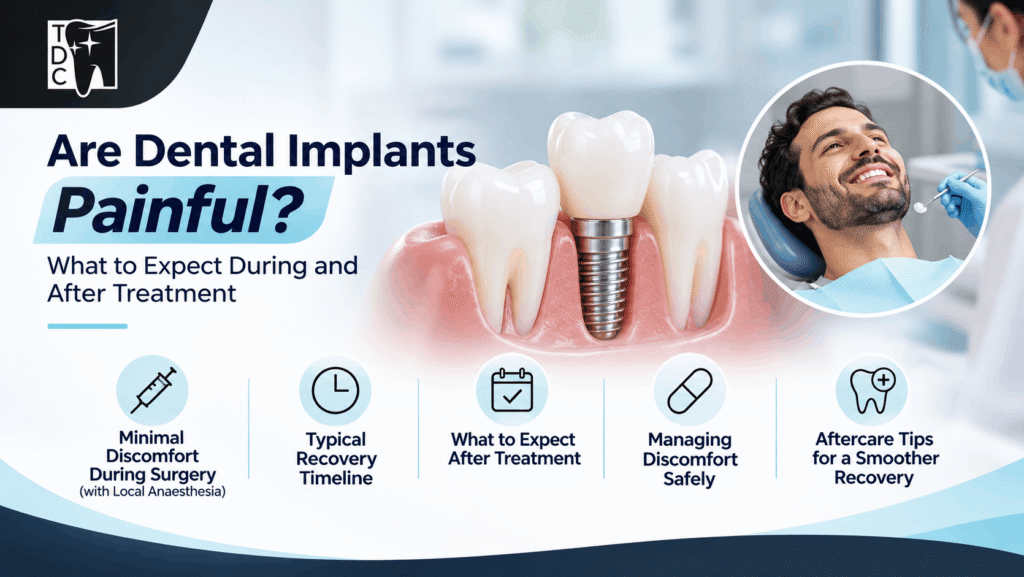
If you are considering dental implants to replace missing teeth, it is natural to wonder whether the procedure will hurt. Concerns about pain, surgery and recovery can make patients hesitant, even when they understand the benefits of replacing missing teeth.
So, are dental implants painful? Most patients experience little or no pain during implant placement because the procedure is performed under local anaesthesia. Some discomfort, swelling or tenderness may occur after the anaesthetic wears off, but these symptoms are usually manageable and improve as healing progresses.
The level of discomfort varies depending on the number of implants placed, the complexity of the procedure, individual pain sensitivity and whether additional treatment, such as bone grafting, is required.
At TDC Dental, patients can enquire about dental implant treatment in Dubai and discuss their concerns before proceeding. This guide explains what implant surgery feels like, what to expect during recovery and how to manage discomfort safely.
Are Dental Implants Painful During Surgery?
Dental implant placement is generally performed using local anaesthesia to numb the treatment area. This means you should not feel sharp pain during the procedure, although you may notice pressure, movement or vibration.
The experience can vary depending on the treatment required. A straightforward implant placement may involve less discomfort than a more complex procedure involving multiple implants, tooth extraction or bone grafting.
What Is a Dental Implant Procedure With Local Anaesthesia Like?
A dental implant procedure with local anaesthesia typically involves the following steps:
- Numbing the treatment area: The dentist administers local anaesthetic to prevent pain during surgery.
- Preparing the implant site: A small opening is created in the jawbone at the planned implant position.
- Placing the implant: The implant fixture is positioned in the bone.
- Protecting the surgical site: Depending on the treatment plan, the implant may be covered with gum tissue or fitted with a healing component.
- Providing aftercare instructions: The dentist explains how to care for the area and manage expected discomfort.
You may feel pressure or vibration during some stages, but sharp pain should not be expected. If you feel pain during treatment, tell your dentist immediately so they can assess the anaesthesia and provide additional measures if necessary.
Can You Be Awake During Dental Implant Surgery?
Yes. Most dental implant procedures are performed while the patient is awake under local anaesthesia.
For patients who experience significant dental anxiety, additional options may be available depending on the clinic, procedure and medical suitability. Discuss anxiety or concerns with your dentist before treatment so that appropriate arrangements can be considered.
What Does Dental Implant Pain After Surgery Feel Like?
Dental implant pain after surgery commonly involves mild to moderate soreness around the implant site once the local anaesthetic wears off.
Patients may experience:
- Tenderness around the gums where the implant was placed.
- Mild swelling of the gums or cheek.
- Bruising around the surgical area.
- Slight bleeding or blood-stained saliva during the early recovery period.
- Discomfort when chewing near the implant site.
These symptoms are part of the body’s normal healing response and generally improve over the first several days.
The amount of discomfort depends on the procedure. A single implant placement may involve relatively limited soreness, while multiple implants or additional surgery may result in more noticeable swelling and tenderness.
How Long Does Dental Implant Pain Last?
Discomfort after implant surgery usually follows a gradual recovery pattern.
| Recovery period | What you may experience |
| First few hours | Numbness from local anaesthesia; discomfort may begin as it wears off |
| First 24–48 hours | Swelling, tenderness and mild to moderate soreness may become more noticeable |
| Days 3–5 | Symptoms generally begin to improve |
| Days 5–7 | Many patients experience substantially less discomfort |
| Following weeks | The implant continues healing and integrating with the jawbone, usually with little ongoing pain |
Recovery varies between patients. Additional procedures, such as bone grafting, can extend the period of swelling and discomfort.
If pain becomes more severe rather than gradually improving, or if new symptoms develop, contact your dentist for assessment.
What Is Dental Implant Recovery Like in Dubai?
The dental implant recovery Dubai patients experience depends on their treatment plan, general health and individual healing response.
Most patients can return to many normal daily activities relatively soon after straightforward implant placement, although strenuous exercise may need to be avoided temporarily.
The First 24 Hours
During the first day, the surgical area may feel tender as the anaesthetic wears off.
To support healing:
- Rest and avoid strenuous physical activity.
- Follow your dentist’s instructions regarding prescribed or recommended medication.
- Eat soft, cool or lukewarm foods that do not irritate the surgical site.
- Avoid disturbing the implant area with your tongue or fingers.
- Follow your dentist’s guidance about brushing and rinsing.
A small amount of blood-stained saliva may occur initially. Persistent or heavy bleeding should be assessed promptly.
Days 2–3
Swelling and tenderness may be more noticeable during the first few days. This does not necessarily indicate a complication, provided symptoms remain within the expected range and begin to improve.
Continue eating foods that are comfortable to chew and avoid placing unnecessary pressure on the implant site.
Days 4–7
Many patients notice a gradual reduction in swelling and discomfort during this period.
Continue following the recommended oral hygiene routine and attend any scheduled follow-up appointment. If stitches were placed, your dentist will explain whether and when they need to be removed.
The Following Weeks and Months
Although the gum tissue may heal relatively quickly, the implant needs additional time to integrate with the jawbone.
The healing period varies according to the implant location, bone quality and whether additional procedures were performed. Your dentist will determine when the implant is ready to support its final restoration.
How to Manage Dental Implant Surgery Discomfort
Some dental implant surgery discomfort is expected after treatment, but several measures may help make recovery more comfortable.
Follow Your Dentist’s Medication Instructions
Your dentist may recommend or prescribe medication to manage pain and, when appropriate, other aspects of recovery.
Take medication only as directed. Do not exceed recommended doses or combine medicines without checking with your dentist or pharmacist.
Antibiotics are not required for every patient and should only be taken when prescribed.
Use a Cold Compress
A cold compress applied externally to the cheek may help reduce swelling during the early recovery period.
Follow your dentist’s instructions regarding when and how long to apply it. Avoid placing ice directly against the skin.
Choose Soft Foods
During the initial healing period, choose foods that are easy to chew and do not place excessive pressure on the surgical site.
Suitable options may include:
- Yoghurt and soft cheese.
- Mashed vegetables.
- Scrambled eggs.
- Soft pasta.
- Smooth soups that are not too hot.
- Soft fish.
Avoid very hard, crunchy or sticky foods near the implant site until your dentist advises that it is safe to resume them.
Rest and Avoid Smoking
Rest can support recovery, particularly during the first day or two. Avoid strenuous exercise for the period recommended by your dentist.
Smoking can interfere with healing and increase the risk of implant complications. Avoid smoking during recovery and discuss longer-term cessation support with your dental team if needed.
Dental Implant Aftercare: What Should You Do?
Appropriate dental implant aftercare helps protect the surgical site and supports healing.
Keep Your Mouth Clean
Continue brushing your other teeth carefully. Follow your dentist’s instructions for cleaning around the surgical area, especially if stitches or a healing component are present.
Your dentist may recommend a specific mouth rinse or cleaning method. Avoid vigorous rinsing or spitting during the early period if instructed, as this may disturb the surgical site.
Avoid Disturbing the Implant Site
Do not touch the surgical area unnecessarily with your fingers or tongue. Avoid chewing directly on the implant site until your dentist confirms that it is appropriate.
Attend Follow-Up Appointments
Follow-up visits allow your dentist to assess healing, check the surrounding tissues and determine whether the next stage of treatment can proceed.
If you have a temporary restoration, ask whether there are any specific restrictions on biting or chewing.
Avoid Tobacco and Excessive Alcohol
Smoking can impair healing and increase the risk of complications. Alcohol may also interfere with recovery or interact with medication.
Follow your dentist’s advice about avoiding these substances during the healing period.
Dental Implant Pain Relief After Surgery
Appropriate dental implant pain relief after surgery depends on the patient’s health, the procedure performed and the severity of symptoms.
Your dentist may recommend an appropriate over-the-counter pain reliever or prescribe medication when necessary. Always follow the dosage instructions and disclose any allergies, medical conditions or medicines you are taking.
Do not place aspirin, crushed tablets or other substances directly on the implant site, as this may damage the tissues.
If pain is not controlled by the recommended medication, contact your dentist rather than increasing the dose yourself.
When Is Dental Implant Pain a Warning Sign?
Some discomfort is expected after surgery, but certain symptoms require professional assessment.
Contact your dentist if you experience:
- Pain that becomes increasingly severe after the first few days.
- Persistent or worsening swelling.
- Fever or feeling generally unwell.
- Pus or discharge around the implant site.
- A persistent unpleasant taste or smell accompanied by other symptoms.
- Bleeding that does not stop with the recommended measures.
- Movement of the implant or restoration.
These symptoms do not automatically mean the implant has failed, but they should not be ignored.
Seek urgent medical attention if you develop rapidly spreading facial swelling, difficulty swallowing or difficulty breathing.
Does Bone Grafting Make Dental Implant Surgery More Painful?
Bone grafting may be recommended when there is insufficient bone to support an implant in the planned position.
The procedure can involve additional surgical steps and may lead to more swelling or discomfort than straightforward implant placement. The amount of discomfort depends on the extent of grafting, the material used and the individual healing response.
Your dentist will explain the purpose of the graft, the expected recovery period and the aftercare required.
Bone grafting does not necessarily prevent successful implant treatment. It is used in selected cases to improve the conditions for implant placement.
Are Dental Implants More Painful Than Tooth Extraction?
Dental implant placement and tooth extraction involve different surgical procedures, so discomfort cannot be compared in exactly the same way for every patient.
Both procedures are commonly performed under local anaesthesia. After treatment, patients may experience soreness, swelling or tenderness.
The level of discomfort depends on factors such as:
- The complexity of the procedure.
- Whether the tooth is impacted or difficult to remove.
- The number of implants or teeth involved.
- Whether bone grafting or other additional treatment is required.
- Individual pain sensitivity and healing response.
Your dentist can explain what to expect based on your specific treatment plan.
Are Dental Implants Worth It Despite the Recovery Period?
For suitable patients, dental implants can provide a stable foundation for replacement teeth and help restore chewing function and appearance.
However, implant treatment involves surgery, healing time, ongoing oral hygiene and regular professional maintenance. It may not be the preferred option for every patient.
When considering implants, discuss the benefits, risks, alternatives, costs and recovery requirements with your dentist. Understanding the full treatment process can help you make a decision that fits your oral health needs and personal preferences.
Dental Implant Consultation at TDC Dental
Concerns about pain and recovery are understandable when considering dental implant treatment. Knowing what to expect before, during and after surgery can help you feel more prepared.
TDC Dental provides a point of contact for patients in Dubai who want to discuss missing teeth and potential implant treatment.
During a consultation, you can ask about the procedure, local anaesthesia, expected recovery, aftercare and treatment options appropriate for your circumstances.
Contact TDC Dental to enquire about a dental implant consultation in Dubai and discuss your questions about treatment and recovery.
Frequently Asked Questions
1. Are dental implants painful during the procedure?
Dental implant placement is usually performed under local anaesthesia, which numbs the treatment area. Patients may feel pressure or vibration but should not experience sharp pain. Tell your dentist if you feel discomfort during the procedure.
2. How painful is dental implant surgery after the anaesthetic wears off?
Mild to moderate soreness, swelling and tenderness are common after surgery. Symptoms are often most noticeable during the first 24–48 hours and generally improve over the following days.
3. How long does dental implant pain last?
Many patients experience noticeable improvement within several days. The exact recovery period depends on the complexity of surgery, individual healing and whether additional procedures were performed.
4. What helps relieve dental implant pain after surgery?
Follow your dentist’s medication instructions, use a cold compress when advised, eat soft foods, rest and avoid disturbing the surgical area. Contact your dentist if pain becomes severe or does not improve.
5. Is dental implant recovery difficult?
Recovery after straightforward implant placement is often manageable with appropriate aftercare. Swelling, tenderness and temporary dietary restrictions may occur. More complex procedures can require a longer recovery period.
6. Can I go to work after dental implant surgery?
Many patients can return to work relatively soon after straightforward implant placement, depending on their comfort and the nature of their work. Your dentist may recommend additional rest after more extensive surgery.
7. What foods should I avoid after dental implant surgery?
Avoid hard, crunchy, sticky or very hot foods that may irritate the surgical site or place excessive pressure on the implant. Choose soft foods and follow your dentist’s dietary instructions.
8. Is swelling normal after dental implant surgery?
Some swelling is a normal part of healing and may be most noticeable during the first few days. Increasing swelling, fever or worsening pain should be assessed by your dentist.
9. Does dental implant surgery require general anaesthesia?
Most implant procedures can be performed under local anaesthesia. Additional sedation options may be considered in selected cases depending on the patient’s needs, medical suitability and clinic availability.
10. When should I contact my dentist after implant surgery?
Contact your dentist if pain or swelling worsens, bleeding persists, you develop fever or discharge, or the implant or restoration feels loose. Seek urgent medical attention for difficulty swallowing or breathing.