Dental Implant Procedure: Step-by-Step Guide for Patients
Replacing a missing tooth can help restore your ability to chew comfortably, support your bite and improve the appearance of your smile. Dental implants are one option for replacing missing teeth. They use a small implant placed in the jawbone to support a crown, bridge or denture.
If you are considering a dental implant procedure, understanding each stage can help you prepare and know what to expect. Treatment typically involves an initial assessment, planning, implant placement, a healing period and the fitting of the final restoration. The exact process depends on your oral health, the number of teeth being replaced and whether additional procedures are needed.
At TDC Dental, patients can discuss their tooth replacement options and receive an individualised treatment plan based on their dental needs.
What Is a Dental Implant Procedure?
A dental implant procedure involves placing a small post, usually made of titanium or another biocompatible material, into the jawbone to replace the root of a missing tooth. As the area heals, the implant can integrate with the surrounding bone. Once it is ready, a replacement tooth is attached.
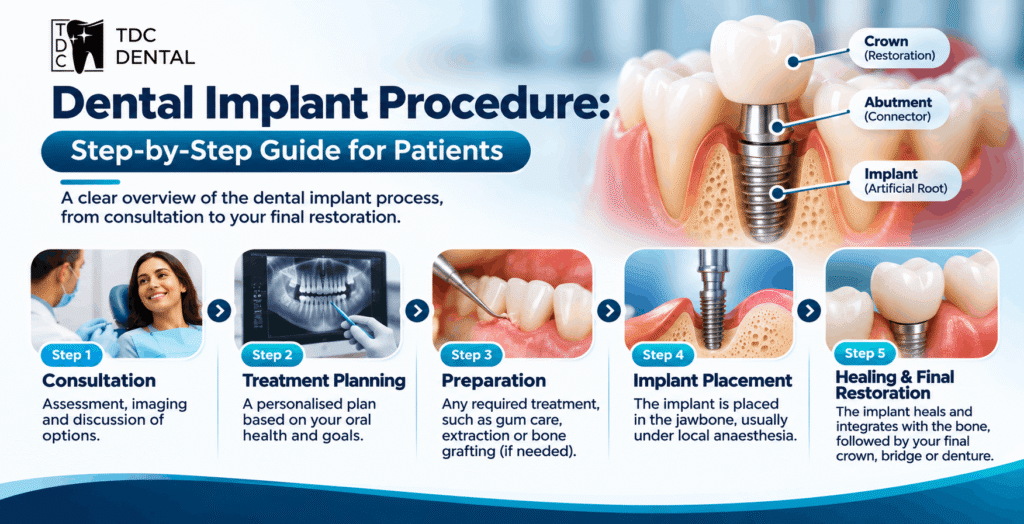
A typical implant restoration has three parts:
- Implant: The post placed in the jawbone to act as an artificial tooth root.
- Abutment: The connector that attaches the implant to the replacement tooth.
- Crown or restoration: The visible part designed to replace the missing tooth.
Dental implants may support a single crown, a bridge replacing several teeth or a denture. Your dentist will recommend an approach after assessing your oral health and treatment goals.
Step 1: Dental Implant Consultation in Dubai
The first stage is a dental implant consultation. Your dentist reviews your dental and medical history, examines your mouth and discusses your concerns, expectations and available treatment options.
The assessment may include:
- Examining your teeth, gums and bite.
- Checking the condition of the jawbone and the space available for the implant.
- Reviewing relevant medical conditions and medications.
- Taking dental X-rays or other imaging when clinically indicated.
- Discussing the proposed treatment, timeline, risks and alternatives.
This appointment helps determine whether implants are suitable for you and whether preparatory treatment may be needed. For example, gum disease may need to be treated before implant placement. If there is insufficient bone to support an implant, your dentist may discuss bone grafting or other options.
Step 2: Personalised Treatment Planning
After the assessment, your dentist develops a treatment plan based on your individual needs. Planning helps determine the implant position, the type of restoration and the sequence of procedures.
Your plan may consider:
- The location and number of missing teeth.
- The quality and volume of the jawbone.
- The condition of nearby teeth and gums.
- Your bite and chewing pattern.
- Whether a temporary replacement is appropriate during healing.
- Any additional procedures required before implant placement.
The treatment plan should also explain the expected timeline, appointments, aftercare and estimated fees. These details can vary between patients, so the dental implant procedure cost in Dubai should be discussed after your clinical assessment rather than assumed from a general price.
Step 3: Preparing for Dental Implant Surgery
Some patients can proceed directly to implant placement. Others may need preparatory treatment to create a healthy foundation.
Depending on your situation, preparation may involve treating gum disease, removing a damaged tooth, allowing an extraction site to heal or performing a bone graft. Not every patient needs these procedures.
Your dental team will provide instructions before surgery. These may include guidance about eating, medications, oral hygiene and arranging transport if sedation is planned. Follow the instructions provided for your specific procedure.
Step 4: Dental Implant Placement
Dental implant surgery is generally performed under local anaesthesia. Sedation may be available in suitable cases, depending on the clinical setting and your needs.
During implant placement, the dentist prepares the site in the jawbone and positions the implant. The gum tissue is then managed to protect the surgical area during healing. The procedure may be completed in one visit for a single implant, although more complex cases can require additional appointments.
You may feel pressure or vibration during the procedure, but local anaesthesia is used to reduce pain. Your dentist can explain what sensations are normal and how to let the team know if you feel discomfort.
In some cases, a temporary tooth may be provided for appearance or function. Whether this is possible depends on the implant’s stability, the location and your treatment plan. A temporary restoration is not suitable for every patient.
Step 5: Healing and Osseointegration
After implant placement, the implant needs time to integrate with the surrounding jawbone. This process is called osseointegration. It helps provide the support needed for the final restoration.
The healing period varies according to the individual, the implant site, bone quality and whether additional procedures were performed. Your dentist will monitor healing and determine when the implant is ready for the next stage.
During recovery, it is important to follow the aftercare instructions, maintain gentle oral hygiene around the area and attend scheduled reviews. Avoid putting excessive pressure on the implant while it heals, unless your dentist has advised otherwise.
Step 6: Attaching the Abutment and Final Restoration
Once the implant has healed sufficiently, the dentist can proceed with the restorative stage.
Depending on the treatment plan, this may involve placing or exposing the abutment and taking impressions or digital scans of the implant area. These records help create a restoration designed to fit your bite and surrounding teeth.
The final crown, bridge or denture is then attached to the implant or implants. Your dentist checks the fit, appearance and bite, and makes adjustments when needed.
The goal is to provide a restoration that functions comfortably and can be maintained with appropriate oral hygiene and regular dental care.
Step 7: Follow-Up and Long-Term Maintenance
Dental implants require ongoing care, just like natural teeth. Although the implant itself cannot develop tooth decay, the surrounding gum and bone can still be affected by inflammation or infection.
To help maintain your implant:
- Brush twice daily with a soft-bristled toothbrush.
- Clean between teeth and around the implant using tools recommended by your dentist.
- Attend regular dental check-ups and professional cleaning appointments.
- Avoid smoking, which can negatively affect oral health and healing.
- Contact your dentist if you notice persistent pain, swelling, bleeding or movement of the restoration.
Your dentist may recommend a personalised maintenance schedule based on your oral health and implant restoration.
Dental Implant Surgery Recovery Time
Dental implant surgery recovery time differs from person to person. Some tenderness, swelling, bruising or minor bleeding may occur after surgery. These symptoms are often most noticeable during the first few days and should gradually improve.
Your dentist will provide instructions for managing discomfort and caring for the surgical site. Recommendations may include eating soft foods temporarily, avoiding strenuous activity for a short period and keeping the area clean without disturbing it.
Contact your dental team if symptoms worsen rather than improve, or if you develop significant swelling, persistent bleeding, fever or severe pain. Follow your dentist’s advice about when to return to normal eating and activity.
It is important to distinguish between the initial recovery after surgery and the full implant treatment timeline. The gum may feel better relatively soon, while the implant may still need additional weeks or months to integrate with the bone before the final restoration can be placed.
How Much Does a Dental Implant Procedure Cost in Dubai?
The dental implant procedure cost in Dubai varies depending on the complexity of treatment and the materials and procedures required. A single implant replacing one tooth may involve different costs from treatment replacing several teeth or supporting a full-arch restoration.
Factors that can affect the total cost include:
- The number of implants required.
- The type of implant and final restoration.
- Whether tooth extraction or bone grafting is needed.
- The complexity of the case and the number of appointments.
- Diagnostic imaging and other clinical requirements.
- Temporary restorations and follow-up care.
A consultation is the best way to receive an estimate tailored to your needs. Ask for a clear breakdown of what the proposed fee includes, such as the implant, abutment, crown, imaging, temporary tooth and follow-up appointments.
Who May Be Suitable for Dental Implants?
Dental implants may be an option for adults who have missing teeth and adequate jawbone support, healthy gums and suitable overall health. Suitability is determined through a clinical assessment rather than age alone.
Some conditions, medications, smoking habits or untreated oral health problems may affect healing or treatment planning. These factors do not automatically rule out implants, but they should be discussed with your dentist before treatment.
If implants are not suitable, your dentist can explain alternatives such as a conventional bridge or removable denture.
Take the Next Step Towards Replacing a Missing Tooth
Understanding the dental implant treatment steps can make the process feel more manageable. From the initial consultation and planning to implant placement, healing and the final restoration, each stage is designed around your oral health and individual needs.
If you are considering dental implant surgery in Dubai, arrange a consultation with TDC Dental to discuss your options, expected timeline and personalised treatment plan.
Frequently Asked Questions
How long does the dental implant procedure take?
The implant placement appointment may take from under an hour to several hours, depending on the number of implants and complexity. The overall tooth implant treatment process usually takes longer because healing and integration with the jawbone are required before the final restoration can be fitted.
Is dental implant surgery painful?
Local anaesthesia is used to minimise pain during implant placement. Some soreness, swelling or bruising can occur afterwards. Your dentist will explain how to manage discomfort and when to seek advice.
How long is dental implant surgery recovery time?
Initial recovery often takes several days, but complete healing and integration can take weeks or months. The timeline depends on your health, implant location and whether additional procedures were needed.
Can I get a tooth on the implant immediately?
In selected cases, a temporary tooth may be attached soon after implant placement. This depends on factors such as implant stability, bite forces and the location of the implant. Immediate restoration is not appropriate for everyone.
What happens if I need a bone graft?
If your jawbone does not have enough volume to support an implant, your dentist may recommend a bone graft. This can add a healing period and may change the overall treatment timeline.
What is included in the dental implant procedure cost in Dubai?
The total fee may include the implant, abutment, crown or other restoration, diagnostic imaging, surgery, temporary restoration and follow-up care. The exact inclusions vary, so request an itemised estimate during your consultation.
How do I care for my dental implant after treatment?
Brush and clean between your teeth daily, follow your dentist’s hygiene instructions and attend regular reviews. Contact your dentist if you notice persistent discomfort, swelling, bleeding or movement of the implant restoration.