How Long Do Dental Implants Last? What Patients Should Know
Dental implants are a widely used option for replacing missing teeth. They are designed to provide a stable foundation for replacement teeth, helping restore chewing function, appearance and confidence. However, one of the most common questions patients ask before choosing this treatment is: how long do dental implants last?
Dental implants can last for many years and, in suitable circumstances, may remain functional for decades. Their long-term success depends on several factors, including oral hygiene, gum health, bone condition, lifestyle habits, the quality of the restoration and regular professional care.
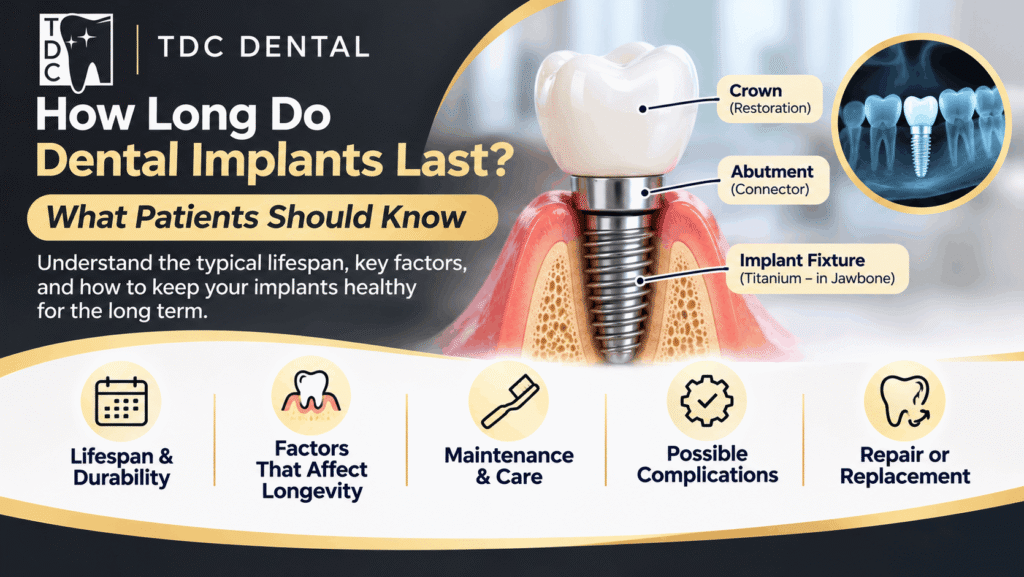
It is also important to understand that the implant itself and the crown attached to it do not necessarily have the same lifespan. The implant fixture may remain stable in the jawbone while the visible crown or another component eventually needs repair or replacement.
At TDC Dental, patients can enquire about dental implant treatment and ongoing oral care in Dubai. This guide explains the expected dental implant lifespan, the factors that influence longevity, how to maintain implants and when professional assessment may be necessary.
How Long Do Dental Implants Last on Average?
The dental implant lifespan varies from patient to patient. A successfully integrated implant can remain functional for many years, sometimes decades, when supported by healthy gums and bone and maintained appropriately.
There is no guaranteed lifespan that applies to every patient. Some implants develop complications, while others continue functioning for a very long time.
When considering how long dental implants last, it is useful to distinguish between the implant fixture and the restoration it supports.
| Dental implant component | What affects its lifespan? |
| Implant fixture | Bone integration, gum health, smoking, medical factors, bite forces and oral hygiene |
| Abutment | Mechanical stress, component condition, restoration design and maintenance |
| Dental crown | Wear, fracture, material, biting forces and oral habits |
| Implant-supported bridge | Design, cleaning, component condition, bite forces and maintenance |
| Implant-supported denture | Attachment wear, denture condition, implant health and maintenance |
The implant fixture is the part placed in the jawbone. The crown, bridge or denture is the restoration that replaces the missing tooth or teeth.
These components experience different types of stress and may need maintenance or replacement at different times.
How Long Do Titanium Dental Implants Last?
Titanium is widely used in dental implant systems because it is biocompatible and can integrate with the surrounding bone through a process called osseointegration.
When patients ask how long do titanium dental implants last, the answer depends on more than the material alone. Implant design, surgical placement, bone health, gum health and ongoing maintenance all contribute to the outcome.
A titanium implant that integrates successfully and remains surrounded by healthy tissues may function for decades. However, titanium does not make an implant immune to complications.
Potential problems include inflammation around the implant, progressive bone loss, mechanical damage and failure of the implant to remain stable.
What Is Osseointegration?
Osseointegration occurs when the bone forms a stable connection with the implant surface. This connection allows the implant to support a crown or other restoration during chewing.
Healing time varies depending on the patient’s bone condition, the implant location and whether additional procedures are required.
During the healing period, your dentist may recommend specific precautions to avoid placing excessive force on the implant before it is ready for restoration.
Successful osseointegration is an important milestone, but long-term success also requires healthy gums, suitable bite forces and consistent oral hygiene.
Do Dental Implants Last Longer Than Dental Crowns?
The implant fixture and its crown serve different purposes, so their expected lifespans should be considered separately.
The implant fixture is anchored in the jawbone, while the crown is exposed to everyday chewing forces, food and potential wear. As a result, the crown may require repair or replacement even when the implant remains healthy.
For example, a crown may become worn, chipped or damaged by excessive biting forces. In such circumstances, a dentist may be able to replace the crown without removing a stable implant fixture.
The treatment required depends on the nature of the problem. A loose or damaged crown is not the same as an implant that has lost its integration with the bone.
This distinction is important when assessing long-term value and planning for future dental maintenance.
What Factors Affect Dental Implant Lifespan?
Several factors affecting dental implant lifespan can be influenced by daily habits, professional care and appropriate treatment planning. Others, such as certain medical conditions or anatomical limitations, require individual assessment.
1. Oral Hygiene and Plaque Control
Keeping the teeth, gums and implant restorations clean is essential for long-term implant health.
Plaque can accumulate around the implant crown and gumline. If it is not removed effectively, the surrounding tissues may become inflamed.
Brush twice daily using fluoride toothpaste and a suitable toothbrush. Clean between the teeth and around implant-supported restorations with appropriate interdental cleaning aids recommended by your dentist.
Good oral hygiene helps reduce the risk of inflammation and supports the health of the tissues around the implant.
2. Gum Health and Peri-Implant Disease
The tissues surrounding an implant need regular monitoring. Inflammation around an implant is known as peri-implant mucositis when it affects the soft tissues without progressive supporting bone loss.
If inflammation progresses and supporting bone is lost, the condition may be classified as peri-implantitis.
Warning signs can include redness, bleeding, swelling, tenderness or discharge around an implant. Some patients may experience few noticeable symptoms in the early stages.
If you notice these changes, arrange a dental assessment rather than waiting for discomfort to develop.
Early identification and appropriate management can help protect the tissues supporting the implant.
3. Smoking and Tobacco Use
Smoking is associated with a higher risk of complications in dental implant treatment, including impaired healing and problems affecting the surrounding tissues.
Tobacco use can also contribute to gum disease and make long-term oral health more difficult to maintain.
If you smoke or use other tobacco products, discuss this with your dentist before implant treatment. They can explain how it may affect healing and what steps may help reduce the risk of complications.
4. Bone Quality and Quantity
Dental implants rely on sufficient supporting bone for stability. Bone volume and density can influence treatment planning, implant positioning and healing.
Some patients may require bone grafting or another preparatory procedure before implant placement. These decisions depend on the available bone and the location of the missing tooth.
After treatment, progressive bone loss around an implant can affect its stability. Regular dental reviews help monitor the surrounding tissues and identify changes that may require attention.
5. Bite Forces and Teeth Grinding
Excessive forces on an implant restoration may contribute to mechanical complications, such as crown fractures, loose screws or damage to other components.
Patients who clench or grind their teeth may place additional stress on their restorations.
Your dentist may assess your bite and, where appropriate, recommend measures such as a protective night guard. The need for these measures depends on your individual circumstances.
Avoid using implant-supported teeth to open packaging or bite objects that could damage the restoration.
6. Medical Conditions and Medications
Certain medical conditions and medications can influence healing, bone health or the management of dental treatment.
Your dentist should review your medical history and current medications before planning implant treatment. This allows potential risks to be considered and the treatment approach to be adjusted where necessary.
Having a medical condition does not automatically mean dental implants are unsuitable. The decision depends on the condition, its management and the overall clinical assessment.
7. Implant Placement and Restoration Design
Appropriate treatment planning, implant positioning and restoration design contribute to long-term function.
The dentist must consider the available bone, the position of neighbouring teeth, the bite and the type of restoration being fitted.
A restoration that is difficult to clean may also create challenges for ongoing maintenance. Your dentist can explain how the design supports function, access for cleaning and future professional care.
How to Make Dental Implants Last Longer
Although no treatment can guarantee a specific lifespan, patients can take practical steps to protect their implants.
Maintain a Consistent Oral Hygiene Routine
Brush twice a day and clean around the implant restoration carefully. Depending on the design, your dentist may recommend interdental brushes, floss or other specialised cleaning aids.
If you have a bridge or a full-arch restoration, ask for instructions on how to clean underneath and around it effectively.
Attend Regular Dental Check-Ups
Routine reviews allow your dentist to examine the gums, check the stability of the restoration and identify possible problems.
The recommended frequency depends on your oral health, implant history and risk factors. Patients with a history of gum disease or implant complications may require closer monitoring.
Schedule Professional Implant Maintenance
Professional maintenance can include assessment of the tissues around the implant, evaluation of the restoration and cleaning using appropriate instruments.
Your dentist may also recommend imaging when clinically indicated. X-rays are not necessarily required at every visit; the decision depends on symptoms, clinical findings and the need to monitor bone levels.
Address Problems Early
Do not ignore persistent bleeding, swelling, pain, a loose crown or changes in how your teeth fit together.
Early assessment can help determine whether the issue involves the crown, abutment, surrounding gum tissue or implant fixture itself.
Avoid Excessive Pressure on Your Teeth
Avoid chewing very hard objects and using your teeth as tools. If you grind your teeth, discuss whether protective measures may be appropriate.
Follow Your Dentist’s Aftercare Advice
After implant placement, follow the instructions provided for cleaning, eating, medication and follow-up appointments.
Avoid changing prescribed medication or stopping treatment without professional guidance.
What Is the Dental Implant Maintenance Cost in Dubai?
The dental implant maintenance cost Dubai patients may encounter depends on the type of restoration, the services required and the clinic’s fees.
Routine maintenance is different from treatment for a complication. A standard review may involve checking the implant, restoration and surrounding tissues, while additional procedures may be needed if inflammation, damage or bone loss is identified.
Potential maintenance expenses may include:
- Routine dental examinations.
- Professional cleaning around the implant.
- Replacement of worn or damaged crowns.
- Repair or replacement of implant components.
- Additional investigations when clinically necessary.
- Treatment for gum inflammation or other complications.
Not every patient will need all these services. The cost depends on the individual treatment plan and whether the visit is routine or addresses a specific problem.
How Can You Plan for Long-Term Implant Care?
Ask your dental clinic which maintenance services are recommended and whether any follow-up visits are included in your original treatment arrangement.
It is also useful to understand the fees for routine examinations, professional cleaning and possible restoration repairs.
Regular maintenance may help identify problems earlier, although it cannot eliminate every risk or guarantee that future treatment will not be needed.
What Is the Dental Implant Replacement Cost in Dubai?
The dental implant replacement cost Dubai patients may be quoted depends on what needs replacing and why the problem occurred.
Importantly, replacing a dental crown is different from removing and replacing the implant fixture itself.
Replacing a Damaged Dental Crown
If the implant is stable and the surrounding tissues are healthy, a damaged or worn crown may be replaceable without removing the implant.
The cost depends on the crown material, the restoration design, laboratory fees and whether other components also require attention.
Repairing or Replacing Implant Components
Sometimes the problem involves an abutment, screw or another prosthetic component rather than the implant fixture.
Depending on the cause and component design, the dentist may be able to repair or replace the affected part.
Replacing a Failed Implant Fixture
If an implant has failed, treatment can be more complex. The dentist must determine why it failed and assess the condition of the surrounding bone and gum tissue.
Management may involve removing the failed implant, treating inflammation or infection where present, allowing healing and considering whether another implant can be placed.
Bone grafting or other additional procedures may be required in some cases. A replacement implant is not always possible or appropriate.
How to Obtain an Accurate Replacement Estimate
An examination is needed to determine which component is affected and what treatment is necessary.
Ask for an itemised estimate that explains the proposed procedure, restoration or components, any additional treatment and the expected follow-up requirements.
This helps you understand the likely cost without assuming that every implant problem requires complete replacement.
What Are the Warning Signs of a Failing Dental Implant?
A dental implant should not be ignored if it develops persistent or unexpected symptoms.
Contact your dentist if you notice:
- Persistent redness, swelling or bleeding around the implant.
- Pain or tenderness that does not improve as expected.
- Pus or discharge around the implant.
- A crown or bridge that becomes loose.
- Changes in your bite or the way your teeth meet.
- Difficulty chewing that develops after the restoration was functioning normally.
A loose crown does not necessarily mean the implant fixture has failed. Similarly, pain or swelling can have several causes and requires proper examination.
Seek prompt dental assessment if you notice these symptoms. Rapidly increasing swelling, fever or difficulty swallowing or breathing requires urgent medical attention.
Can Dental Implants Last a Lifetime?
Dental implants can sometimes remain functional for decades, but it is not possible to guarantee that an implant will last for a patient’s entire lifetime.
Long-term outcomes depend on the implant, the restoration, the surrounding tissues, oral hygiene, lifestyle and general health. Even when the implant fixture remains stable, the crown or other components may eventually require maintenance or replacement.
It is more realistic to view dental implants as a long-term treatment that requires ongoing care rather than a permanent solution that never needs attention.
A personalised maintenance plan and regular professional reviews can help you monitor the condition of your implants over time.
Are Dental Implants Worth the Long-Term Investment?
Dental implants can offer important benefits for suitable patients, including stable support for replacement teeth and the ability to restore chewing function.
However, whether they represent good value depends on your clinical needs, the initial treatment cost, expected maintenance, restoration requirements and personal priorities.
When comparing dental implants with bridges or dentures, consider:
- The number of missing teeth being replaced.
- The condition of your jawbone and remaining teeth.
- The surgical and healing requirements.
- The expected maintenance and possible repair costs.
- Your comfort, aesthetic and functional preferences.
- Your ability to maintain oral hygiene and attend follow-up visits.
Discussing these factors with your dentist can help you understand the benefits and limitations of each option before making a decision.
Dental Implant Care and Consultation at TDC Dental
Understanding the expected dental implant lifespan is an important part of deciding whether implant treatment is appropriate for you. While implants can provide long-term tooth replacement, their continued function depends on suitable treatment planning, healthy surrounding tissues and regular maintenance.
TDC Dental provides a point of contact for patients in Dubai who want to discuss missing teeth, implant treatment and ongoing dental care.
During a consultation, you can enquire about the factors affecting implant longevity, the maintenance recommended for your restoration and the treatment options that may be suitable for your oral health.
Contact TDC Dental to enquire about a dental implant consultation in Dubai and discuss your tooth replacement and maintenance needs.
Frequently Asked Questions
1. How long do dental implants last on average?
Dental implants can last for many years and may remain functional for decades. Their longevity depends on bone integration, gum health, oral hygiene, smoking, bite forces, medical factors and regular professional maintenance. No specific lifespan can be guaranteed for every patient.
2. How long do titanium dental implants last?
Titanium implants may last for decades when they integrate successfully with the jawbone and remain healthy. Their lifespan depends on clinical and lifestyle factors, not just the material used.
3. Does the dental implant crown last as long as the implant?
Not necessarily. The implant fixture may remain stable while the crown becomes worn, chipped or damaged. In some cases, the crown can be replaced without removing the implant fixture.
4. What factors affect dental implant lifespan the most?
Important factors include oral hygiene, gum health, smoking, bone condition, bite forces, teeth grinding, medical history, implant placement and regular professional care.
5. What is the dental implant maintenance cost in Dubai?
Maintenance costs vary by clinic and the services required. Routine reviews and professional cleaning differ from the costs of crown repairs, component replacement or treatment for implant-related complications. Request a fee breakdown from your dental clinic.
6. What is the dental implant replacement cost in Dubai?
The cost depends on whether the crown, an implant component or the implant fixture itself needs replacement. Failed implant treatment can require additional procedures, so an examination is necessary to establish an appropriate estimate.
7. Can a failed dental implant be replaced?
Sometimes. A dentist must first assess the reason for failure and the condition of the surrounding tissues. Some patients may be suitable for another implant after appropriate treatment and healing, while others may need an alternative tooth replacement option.
8. How often should dental implants be checked?
The frequency depends on your gum health, implant history and individual risk factors. Your dentist will recommend an appropriate review schedule and may suggest more frequent monitoring if you have a history of gum disease or complications.
9. Can smoking shorten the lifespan of dental implants?
Smoking is associated with an increased risk of implant complications and impaired healing. Discuss tobacco use with your dentist so that potential risks and ways to support treatment success can be considered.
10. How do I know if my dental implant is failing?
Possible warning signs include persistent swelling, bleeding, pain, discharge or movement of the restoration. These symptoms require dental assessment because a loose crown, gum inflammation and implant fixture failure are different problems.